Building a Smart Agricultural System through Integration of Binary AI Models and Field Data
Digitalization of agriculture is one of the technological developments that can help improve the way land and crops are managed. The use of sensors, the Internet of Things, databases, dashboards and Artificial Intelligence allows agricultural data to be collected and analyzed in a more structured manner.
One model that can be used in the early stages of developing a smart agricultural system is binary classification. The model produces two categories of decisions based on the data received.
The binary approach can be used as a foundation because the results are simple and relatively easy to translate into action. The system can determine whether a condition is normal or requires attention, without having to directly use complex classifications.
System Architecture
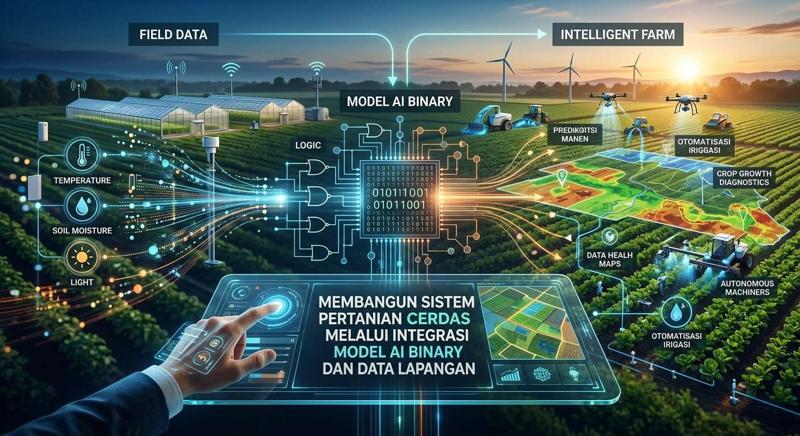
A binary AI-based farming system can consist of several main components. The first component is the data source. Data can come from soil sensors, weather sensors, cameras, IoT devices, or manual input from farmers.
The second component is data storage. All information collected can be stored in a database so that it can be used for analysis and model training.
The third component is the AI model. The model receives processed data and produces binary predictions.
The final component is the user interface. Prediction results can be displayed via a dashboard so farmers can see land conditions more easily.
Field Data Collection
Field data is an important part of the system. Data collection should be carried out consistently so that sufficient information is available for the learning process.
For example, sensors can collect soil moisture data every few minutes or hours. The data is then sent to the server.
In addition to sensor data, farmers can enter information such as watering activities, fertilization, changes in plant conditions, and observation results.
A combination of automatic data and manual data can provide a more complete picture of land conditions.
Application of Binary Classification
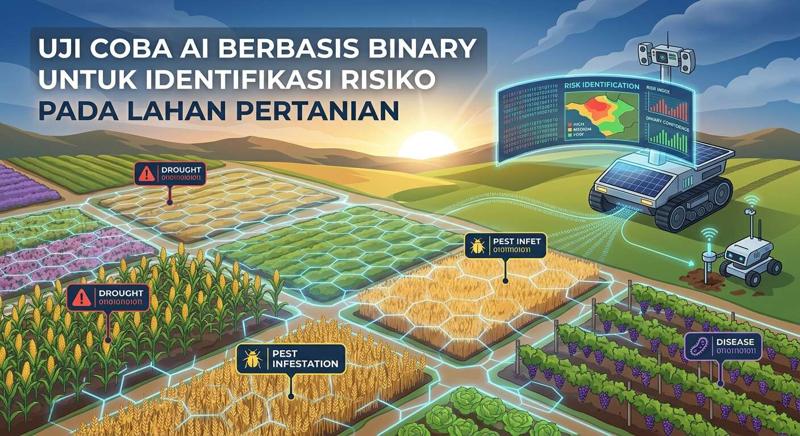
Models can be used for various purposes. One example is determining whether an area requires inspection.
A value of 0 can indicate a normal condition, while a value of 1 indicates a condition that requires attention.
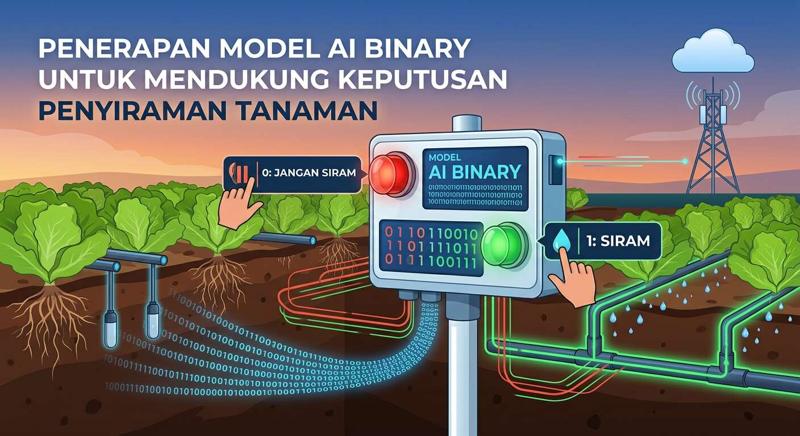
Another example is the need for watering. A value of 0 can mean that it does not need to be watered, while a value of 1 means that it needs to be watered.
Label determination must be adjusted to the system objectives. A model should have a clear objective so that the dataset and evaluation process can be designed appropriately.
Trial Stage
Trials should be carried out in stages. In the first stage, the system can be used only to collect data.
The second stage is creating a dataset and training the model. After that, the model is tested using new data.
The third stage is connecting the model to the dashboard. Users can see prediction results directly.
In the early stages, prediction results should only be used as recommendations. Farmers continue to carry out field inspections before taking action.
If the system has demonstrated appropriate performance, automation can be considered.For example, the system can send notifications when the model detects certain conditions.
System Evaluation
Evaluation is not only carried out on the AI model, but also on the entire system.
From the model side, evaluation can use accuracy, precision, recall and F1-score. These metrics can provide information about the model's ability to carry out classification.
From the system side, evaluation can include sensor stability, data transmission speed, dashboard availability, and ease of use.
From the user side, evaluation can be done by asking for input from farmers. This information is important because a system that has good technical performance is not necessarily easy to use in daily activities.
Further Development
Binary models can be the basis for developing more complex systems. Once there is more data, the system can be developed into multi-class classification.
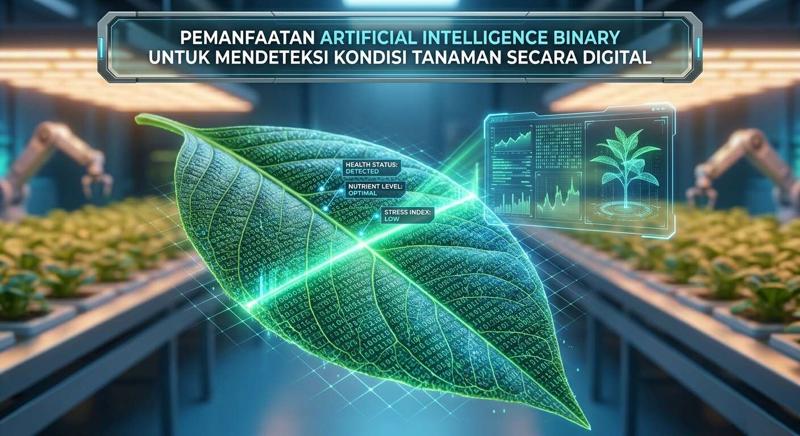
In addition, integration with computer vision can enable the system to analyze plant images. Weather data can also be added so that the system has more complete environmental information.
The use of IoT technology allows data to be collected automatically. AI can then process the data periodically.
In the next stage, the system can be developed into a decision support platform that combines various sources of information in one dashboard.
The Role of Humans in AI Systems
Even though we use Artificial Intelligence, humans still have an important role. AI works based on patterns learned from data so it still has the possibility of producing errors.
Farmers have experience and knowledge about field conditions that cannot always be represented in datasets.
Therefore, a more appropriate approach is to make AI a decision support tool. Prediction results can be additional information for farmers before determining action.
Conclusion
Integrating binary AI models with field data can be one step in building a smart agricultural system. The approach allows a wide range of agricultural data to be collected, processed and translated into simple decisions.
Trials can be started on a small scale through data collection, model training, testing and evaluation. Once the system shows appropriate results, deployment can be expanded with additional sensors, IoT, dashboards, and automation.
The success of the system is not only determined by the AI algorithm. Data quality, field conditions, equipment used, and farmer involvement are also important factors.
With development carried out in stages, binary AI can become one component in the transformation towards data-based agriculture that is more measurable, efficient and adaptive to changing environmental conditions.