5 Signs Your Plants Are Stressed and How to Deal With Them
Introduction
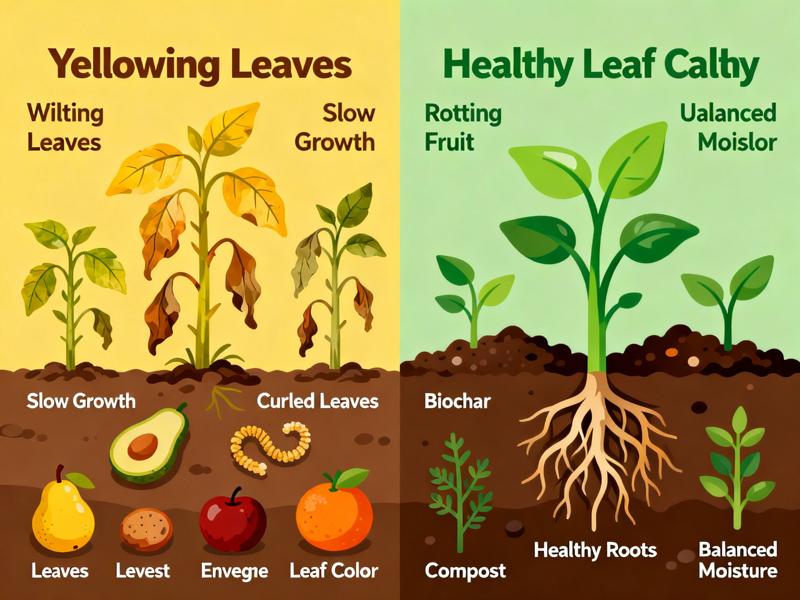
Plants can also experience stress, just like other living creatures. Stress in plants can cause leaves to turn yellow, stunted growth, or fruit to rot easily. Recognizing the signs early helps us take action to keep plants healthy and productive.
1. Yellowing or Wilting Leaves
Cause:
-
Lack of water or nutrients.
-
The soil is too dense so it is difficult for the roots to absorb water.
-
Affected by pests or disease.
Solution:
-
Water the plant according to the needs of the species.
-
Mix the soil with compost or biochar to increase fertility and aeration.
-
Cut off damaged leaves and check for pests.
2. Stalled or Slow
Growth
Cause:
-
Soil nutrition is not balanced.
-
The roots are too dense or damaged.
-
Lack of light or unsuitable environment.
Solution:
-
Add organic fertilizer or biochar mixture to support root growth.
-
Make sure the plant gets enough light according to its type.
-
Loosen the soil around the roots without damaging them.
3. Leaves Wrinkle or Roll
Cause:
-
Plants are stressed by drought or extreme temperatures.
-
Pest attacks such as aphids or mites.
Solution:
-
Water properly and keep the soil moist.
-
Use natural pesticides or organic methods to control pests.
-
Monitor regularly to prevent further damage.
4. Fruit Rotates Quickly or Is Not Quality
Cause:
-
Unhealthy roots or nutrient-poor soil.
-
Fungal or bacterial disease.
-
The soil is too wet or too dry.
Solution:
-
Mix biochar into the soil to increase nutrient and water retention.
-
Prune rotten fruit to prevent the spread of disease.
-
Make sure the soil drains well so the roots don't rot.
5. Uneven or Spotted Leaf Color
Cause:
-
Deficiency of minerals such as nitrogen, phosphorus, or potassium.
-
Fungal, bacterial or viral attacks.
Solution:
-
Give fertilizer according to the plant's nutritional needs.
-
Use biochar mixed with compost to support beneficial microbes.
-
Remove leaves affected by the disease to prevent it from spreading.
Conclusion
Detecting signs of stress in plants early on is very important to maintain their health and productivity.With a combination ofroutine care, soil management, and the use of biochar, plants can recover more quickly, grow optimally, and produce quality fruit or flowers.