What is Biochar
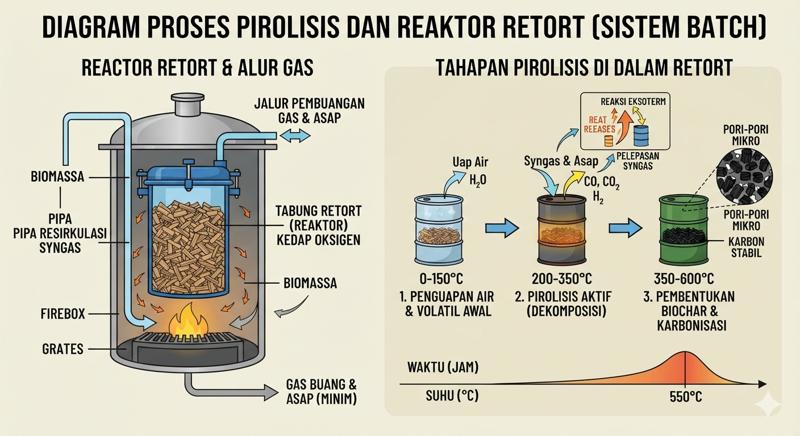
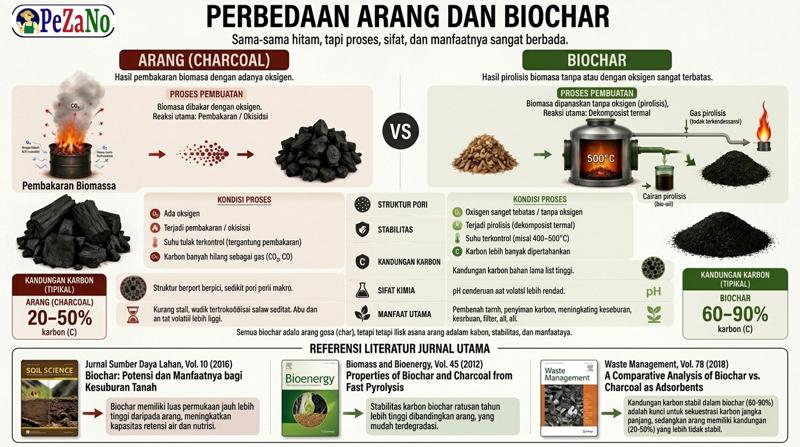
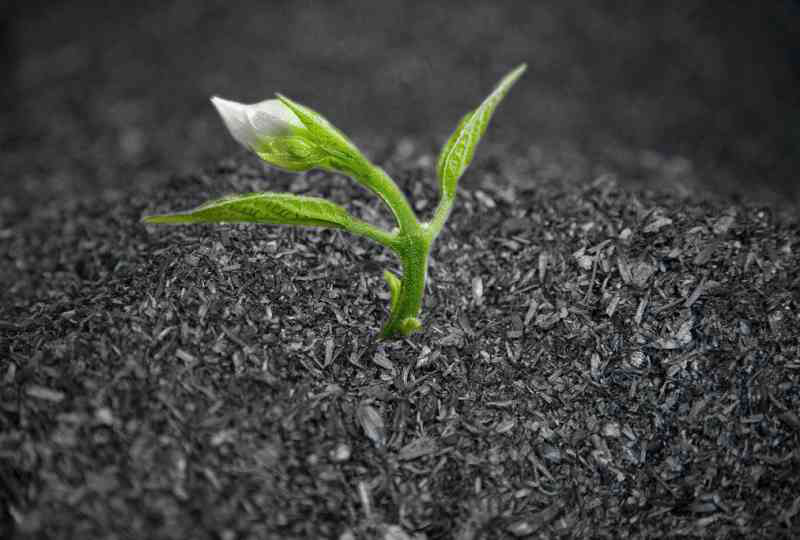
Biochar is a carbon material produced from the pyrolysis process of biomass such as wood, straw, agricultural waste, or other organic waste by reducing oxygen. This pyrolysis process converts biomass into carbon material that is stable and does not decompose easily. Biochar can then be used as an amendment or fertilizer to improve soil quality and increase agricultural productivity.
The benefits of using biochar in agriculture include:
1. Increased soil fertility: Biochar has the ability to improve soil structure, increase water holding capacity, and bind nutrients in the soil. This helps improve soil fertility and nutrient availability for plants.
2. Carbon storage: Biochar is a stable carbon material and has the potential to store carbon in the soil for long periods of time. This helps reduce the amount of carbon dioxide in the atmosphere and contributes to climate change mitigation.
3. Reduction of greenhouse gas emissions: The use of biochar can help reduce greenhouse gas emissions because the biomass converted into biochar is carbon that would normally be released into the atmosphere as carbon dioxide if left to decompose or burn.
4. Reduction of dependence on chemical fertilizers: By improving soil quality, biochar helps reduce the need for chemical fertilizers in the long term.
5. Reduces soil erosion: Biochar helps increase the stability of soil aggregates and reduces erosion by water and wind.
6. Increased soil water capacity: Biochar can act as a sponge that stores water and releases it slowly, helping to maintain soil moisture and reducing the need for irrigation.
The use of biochar in agriculture can be a sustainable approach to increasing agricultural productivity and taking better care of the soil. However, the effectiveness of biochar can vary depending on the type of biomass used, ignition method, application dose, and local environmental conditions. Therefore, the application of biochar needs to be adjusted to the needs and characteristics of each agricultural location.