What is the Difference Between Regular Charcoal and Biochar
The difference between ordinary charcoal and biochar lies in the method and purpose of making it, the source of the raw materials, and its use. Here are the main differences between the two:
1. Manufacturing Process:
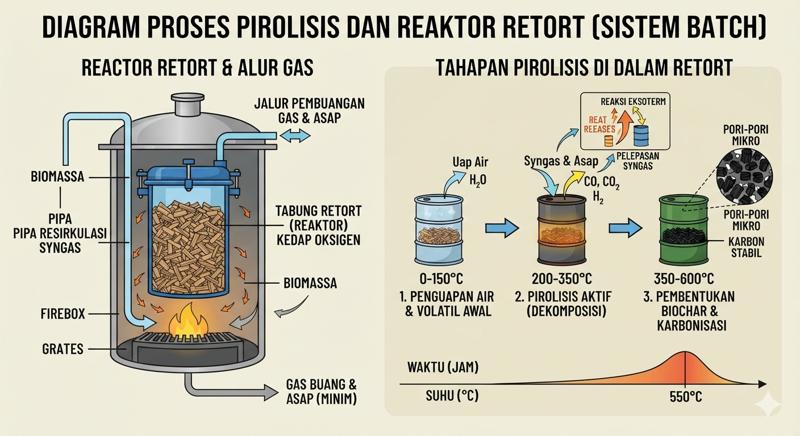
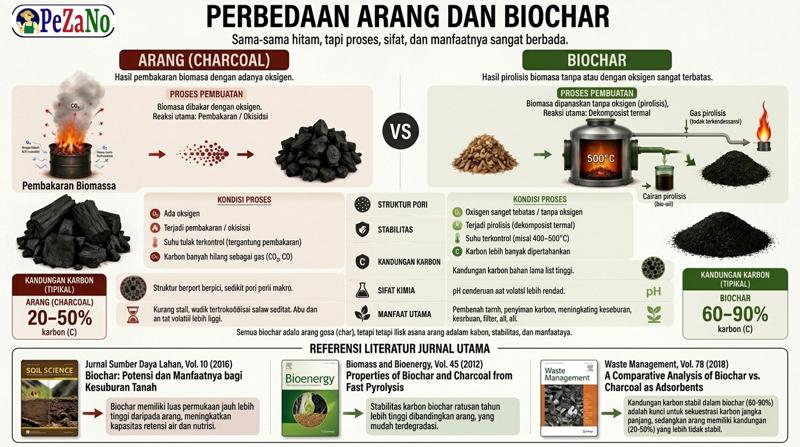
- Ordinary Charcoal (Charcoal): Ordinary charcoal is made through a pyrolysis process, namely heating raw materials such as wood, coconut shells, or nut shells under conditions of limited oxygen (anaerobic) so that thermal decomposition occurs. This process produces stable solid carbon which is used as fuel or in industry.
- Biochar: Biochar is also made through a pyrolysis process, but with a different purpose. Biochar is produced in a similar way, by heating biomass such as wood, straw, agricultural waste, or other organic waste with little or no oxygen. This process produces carbon material that is stable and does not decompose easily.
2. Purpose of Creation:
- Ordinary Charcoal (Charcoal): Ordinary charcoal is generally produced for use as fuel in cooking, grilling, or in the metallurgical and chemical industries.
- Biochar: Biochar is made with the main aim of being a soil conditioner or organic fertilizer to increase soil fertility and support sustainable agriculture.
3. Source of Raw Materials:
- Ordinary Charcoal (Charcoal): The raw material for ordinary charcoal is usually certain types of wood, coconut shells, or other wood waste.
- Biochar: The raw material for biochar can come from various biomass sources, including wood, straw, agricultural waste, empty oil palm fruit bunches, and so on.
4. Usage:
- Ordinary Charcoal (Charcoal): Charcoal is commonly used as an energy source in cooking, grilling, or in industrial processes.
- Biochar: Biochar is used as a soil amendment to improve soil fertility and quality. It helps increase soil water and nutrient retention and provides a good environment for microorganisms that are beneficial to plant growth.
5. Environmental Influence:
- Ordinary Charcoal (Charcoal): Using ordinary charcoal as fuel can cause greenhouse gas emissions and air pollution.
- Biochar: Biochar, when applied to soil, helps store carbon over long periods of time, thus having the potential to reduce the amount of carbon dioxide in the atmosphere and contribute to climate change mitigation.
In short, the main difference between ordinary charcoal and biochar is the purpose of making and using it. Charcoal is commonly used as fuel, while biochar is produced as a soil amendment to increase agricultural productivity and reduce negative environmental impacts.