What is the Difference Between Humic Acid VS Biochar Which is a Soil Improver?
In sustainable agricultural practices, soil amendments are the key to increasing fertility, improving soil structure and supporting plant productivity. Two ingredients that are often used are humic acid and biochar. Both function as soil conditioners, but have very different characteristics, ways of working and duration of effect. In simple terms, humic acid works relatively quickly - it can even be seen in about 7 days - while biochar has a long-term impact for years.
What is Humic Acid?
Humic acid is a complex organic compound resulting from the decomposition of organic materials such as leaves, wood and plant residues that have decomposed over a long time. This substance is usually extracted from leonardite, peat, or mature compost.
Humic Acid Characteristics:
-
Soluble in water (especially in alkaline conditions) so it is easy to apply via spray or spray.
-
Works fast, because it directly interacts with the roots and nutrients in the soil.
-
Increases nutrient availability, especially nitrogen (N), phosphorus (P), and potassium (K).
-
Stimulates root growth and the activity of soil microorganisms.
Within about 7 days after application, plants often show responses such as greener leaves, more active root growth, and fresher plant conditions. This happens because humic acid functions as a chelator (nutrient binder), so that nutrients are more easily absorbed by plants.
However, humic acid is relatively quickly decomposed by soil microorganisms. This means that the effect is not permanent and requires regular reapplication to maintain the benefits.
What is Biochar?
Biochar is biological charcoal produced from burning biomass (such as rice husks, wood or agricultural waste) through a pyrolysis process with a small amount of oxygen. Unlike ordinary charcoal, biochar is specifically designed for agricultural applications.
Biochar Characteristics:
-
Highly porous structure, like a micro sponge.
-
Very stable in the soil, can last tens to hundreds of years.
-
Increase the cation exchange capacity (CEC) of the soil.
-
Improves soil structure and water retention capacity.
Biochar does not work as quickly as humic acid. In the first week of application, significant changes may not be seen in the plants. However, in the long term, biochar improves the physical structure of the soil, increases the population of beneficial microbes, and stabilizes nutrients so they are not easily leached.
Because of its high carbon stability, biochar also plays a role in mitigating climate change by locking carbon in the soil for years.
Main Differences Between Humic Acid and Biochar
| Aspect | Humic Acid | Biochar |
|---|---|---|
| Basic properties | Soluble organic compounds | Solid biological charcoal |
| Working speed | Fast (± 7 days visible effect) | Slow |
| Effect duration | Weekly–monthly | Many years |
| Main function | Increase nutrient uptake | Improving soil structure |
| Stability | Easy to decompose | Very stable |
| Repeat required | Yes, routine | Not often |
From the table it can be seen that humic acid is more suitable for a quick response, for example when plants experience stress or need an initial growth boost. On the other hand, biochar is more suitable for long-term investment in improving overall soil quality.
Which is Better?
The answer is not to choose one, but to understand the function of each. If your goal is to improve soil conditions in the long term—for example on sandy soil or soil poor in organic matter—biochar is a strategic choice. However, if you want to increase the effectiveness of fertilizer and speed up plant response in a short time, humic acid is very helpful.
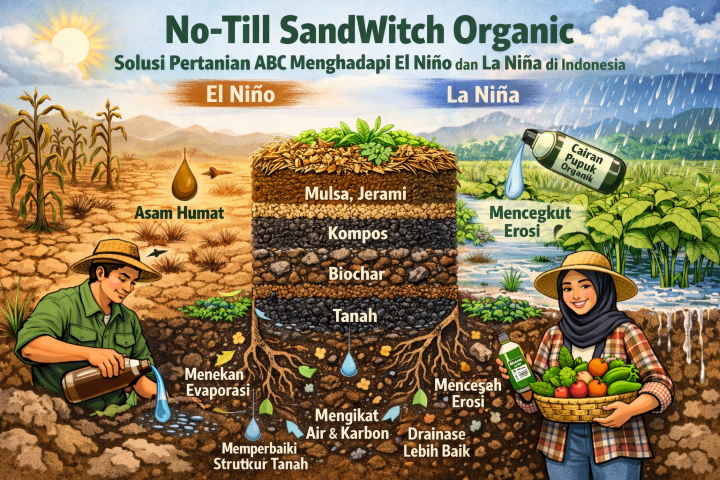
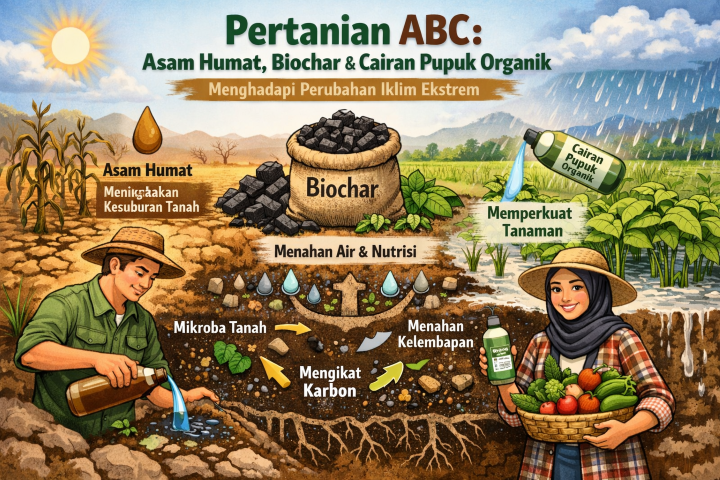
In fact, a combination of the two often provides optimal results. Biochar provides a “home” for microorganisms and retain nutrients, while humic acid helps dissolve and activate available nutrients. In a sustainable farming system, an integrated approach like this can increase the efficiency of chemical fertilizers, reduce long-term costs and maintain soil health.
Humic acid and biochar are both soil conditioners, but differ in the mechanism and duration of action. Humic acid works quickly and provides visible effects in about 7 days, but requires regular application because it breaks down easily. In contrast, biochar works slowly but lasts a long time in the soil, even for years, with the main benefit of improving soil structure and stability.
In modern agricultural practices—especially those that lead to environmentally friendly systems—the two are not to be compared competitively, but rather to be utilized synergistically. By understanding these differences, farmers can determine more effective, efficient and sustainable fertilization and soil improvement strategies.