Biochar as a Natural Carbon Store in Climate Mitigation Efforts
Climate change is one of the biggest environmental problems facing the world today. Increasing concentrations of greenhouse gases in the atmosphere, especially carbon dioxide (CO₂), have caused global temperatures to rise which has an impact on various aspects of life. Phenomena such as extreme weather, prolonged droughts, floods and reduced agricultural productivity are becoming more frequent due to climate change. To reduce this impact, various mitigation efforts continue to be developed, one of which is through the use of biochar as an environmentally friendly natural carbon store.
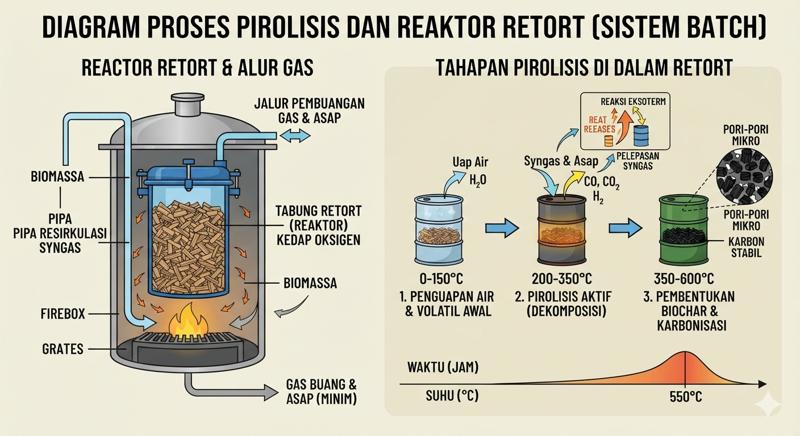
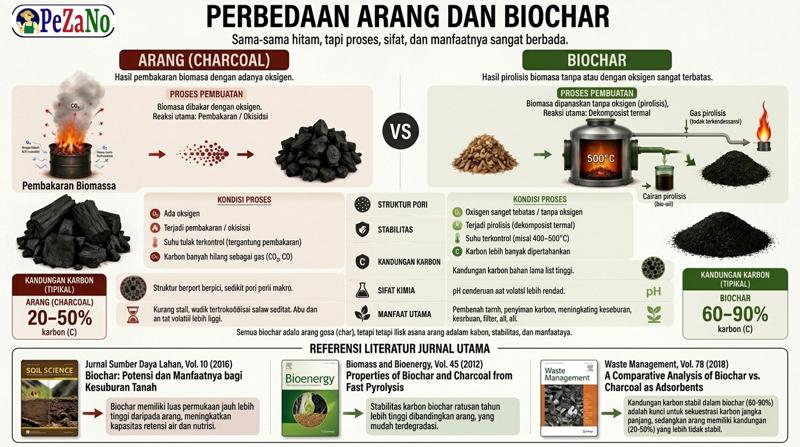
Biochar is a carbon-rich material produced from the biomass pyrolysis process, namely heating organic material at high temperatures with little or no oxygen. Biochar raw materials can come from various types of organic waste such as rice husks, straw, corn cobs, coconut shells, sawdust and other agricultural waste. Through the pyrolysis process, the carbon contained in biomass is converted into a more stable form so that it can be stored in the soil for a very long time.
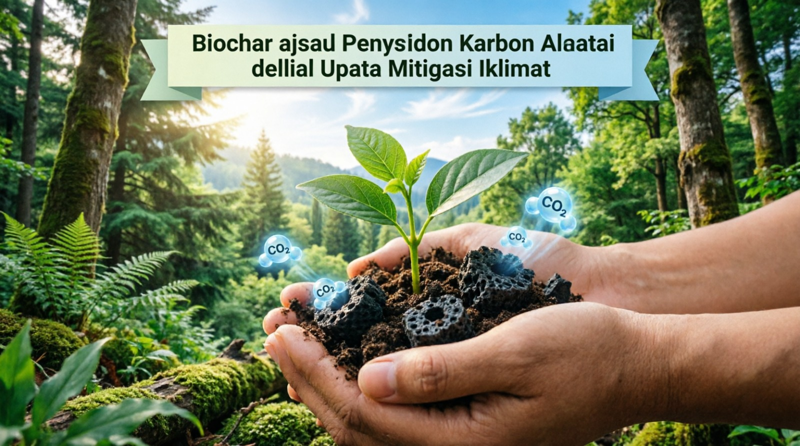
One of the main advantages of biochar is its ability to store carbon effectively. Under normal conditions, organic waste that rots or is burned will release carbon back into the atmosphere in the form of carbon dioxide. However, when the waste is processed into biochar, most of the carbon can be locked in a stable material structure. The carbon stored in biochar can even last for hundreds to thousands of years in the soil. This ability makes biochar a potential carbon storage technology to help reduce greenhouse gas emissions.
In the context of climate change mitigation, biochar has a very important role. Climate mitigation is an effort to reduce sources of greenhouse gas emissions or increase their absorption capacity. By storing carbon in the soil, biochar helps reduce the amount of carbon circulating in the atmosphere. The more carbon that can be stored through the use of biochar, the smaller the carbon contribution to global warming. Therefore, biochar is often referred to as one of the nature-based solutions that supports controlling climate change.
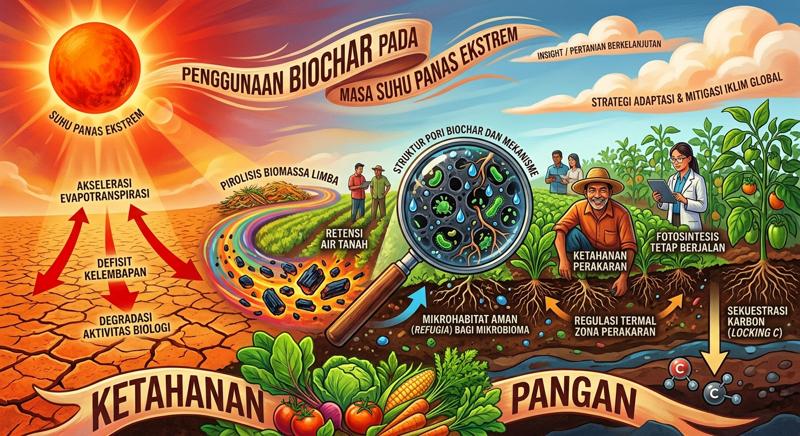
Apart from functioning as a carbon store, biochar also provides additional benefits for the environment. The porous structure of biochar allows this material to absorb and retain water in greater quantities than ordinary soil. These conditions help plants survive the dry season or when rainfall is low. Biochar's ability to retain soil moisture is very important considering that climate change often causes erratic weather patterns and increases the risk of drought in various regions.
Biochar also plays a role in increasing soil fertility. The pores in biochar can store nutrients and prevent them from being wasted due to leaching by rainwater. In this way, plants can obtain more optimal nutrition. In addition, biochar provides a good habitat for soil microorganisms that play a role in the decomposition process of organic matter and nutrient cycling. The presence of these microorganisms helps create a healthier and more productive soil ecosystem.
In the agricultural sector, the use of biochar can be a solution that supports sustainable agricultural practices. Farmers can utilize agricultural waste that was previously thrown away or burned to become biochar which has high utility value. This step not only reduces air pollution due to open burning, but also helps increase agricultural land productivity. With soil that is more fertile and able to store water better, crop yields can increase while reducing dependence on chemical fertilizers.
Indonesia has great potential in developing biochar because it is an agricultural country with abundant amounts of biomass waste. Every year, millions of tonnes of agricultural waste are generated from various food crop cultivation, plantation and forestry activities. If this waste is used as raw material for biochar, the benefits obtained will not only be a reduction in waste, but also an improvement in environmental quality and a contribution to reducing carbon emissions.
However, the application of biochar still faces a number of challenges. One of the main obstacles is the lack of public knowledge regarding the benefits and techniques for making biochar. Apart from that, the availability of simple and affordable production technology still needs to be improved so that it can be widely used by farmers. Support from the government, research institutions and the education sector is very much needed to expand the use of biochar through training, counseling and ongoing research.
Various studies show that biochar has great potential as part of a climate change mitigation strategy. Apart from being able to store carbon in the long term, biochar also helps improve soil quality, increases the efficiency of fertilizer use, and supports agricultural resilience to the impacts of climate change. This combination of benefits makes biochar a relevant innovation to be implemented in facing global environmental challenges.
In conclusion, biochar is a natural carbon store that has an important role in climate change mitigation efforts. Its ability to lock up carbon for long periods of time helps reduce the concentration of greenhouse gases in the atmosphere and reduces the rate of global warming. Apart from that, biochar also provides benefits for soil fertility, water availability and agricultural productivity. With abundant biomass potential and support from various parties, the use of biochar can be a real step towards more sustainable development and a healthier environment for future generations.