How Young Farmers Manage Land Smartly and Sustainablely
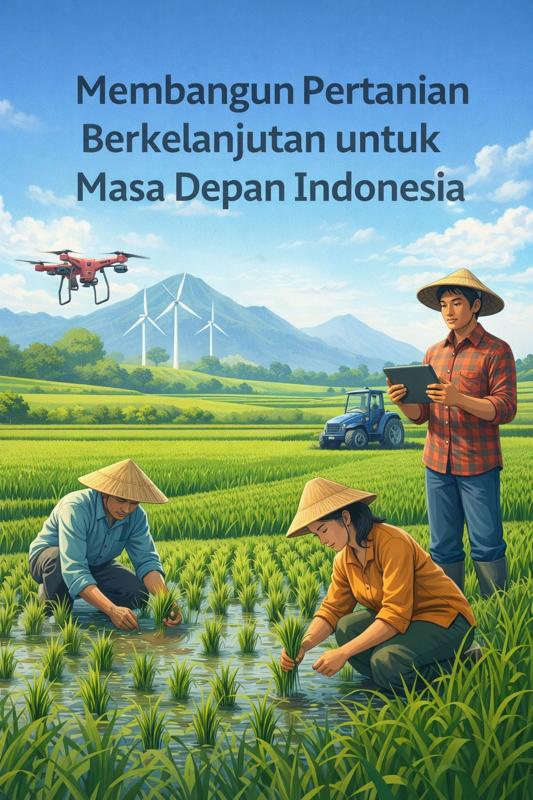
Today's young farmers are no longer just custodians of rice fields, but also innovators and pioneers of change.
In the midst of increasingly extreme climate challenges, fluctuating fertilizer prices, and ever-increasing food needs, the younger generation has an important role to play in bringing agriculture in a smarter and more sustainable direction.
With the help of technology, science and a spirit of collaboration, they have proven that farming in the digital era can remain profitable, efficient and environmentally friendly.
The following are the methods and principles that young Indonesian farmers are starting to apply in managing land smartly and sustainably.
1. Getting to Know the Soil, Not Just Planting
Before planting anything, modern farmers always know the character of the soil first.
Soil is not just a growing medium — it is a living ecosystem. There are millions of microorganisms working in it, helping plants absorb nutrients and maintain their balance.
Young farmers now use soil sensors, laboratory tests, or digital analysis applications to map the condition of their land. They can know:
-
soil pH level,
-
humidity,
-
Nitrogen, phosphorus and potassium levels
-
as well as the level of organic matter.
From this data, farmers can determine suitable plant types, ideal planting times, and more efficient fertilization strategies.
For example, if the soil is too acidic, farmers can neutralize it first with dolomite lime or natural organic materials before planting.
2. Turning Waste Into a Source of New Life
One of the characteristics of young farmers is creative use of leftovers
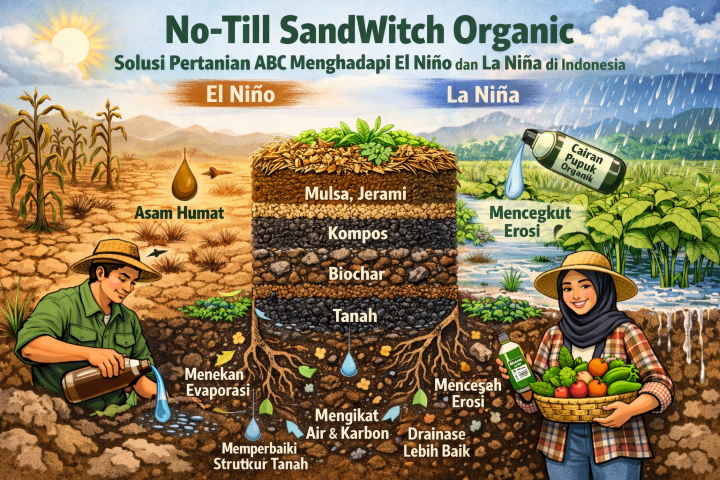
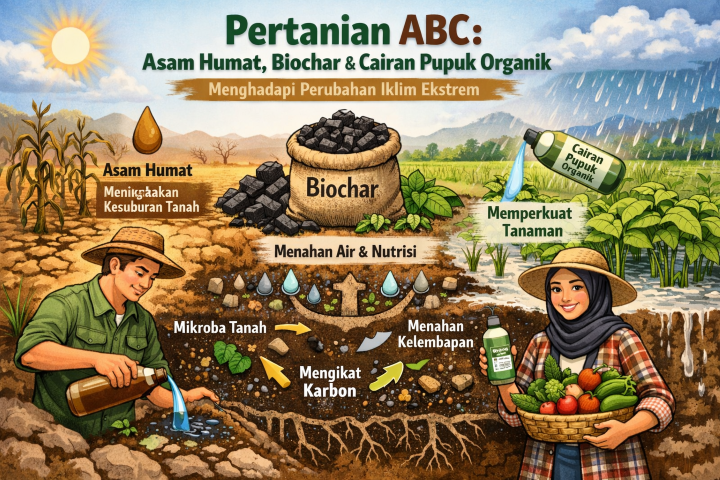
Instead of burning agricultural waste such as leaves, straw, or twigs, they process it into liquid organic fertilizer (bioliquid), biochar, or solid compost.
For example:
-
Dried leaf and stem waste is fermented into natural liquid fertilizer.
-
Charcoal resulting from pyrolysis is used as biochar, which can improve soil quality and store carbon below the surface.
When used on fruit trees such as mango or avocado, biochar helps the soil become looser, retains moisture, and improves air circulation in the roots.
The effect is that roots grow healthier, leaves are greener, and crop yields increase without dependence on chemical fertilizers.
This is the real form of circular agriculture — a system that utilizes all resources repeatedly, leaving no waste.
3. Managing Water Smartly
Water is the lifeblood of agriculture. But in the era of climate change, water supply is increasingly difficult to predict.
Young farmers are aware that they must manage water with technology, not old habits
Many of them have implemented:
-
Automatic drip irrigation which only distributes water according to plant needs.
-
Soil moisture sensor to detect when plants really need watering.
-
Rainwater storage (rain harvesting) for dry season reserves.
In this way, water is used efficiently — not wasteful, not stagnant, and still maintain healthy roots.
4. Technology and Data Become Farmers' New Friends
Modern farmers no longer rely on weather forecasts or intuition alone.
Now, many agricultural applications help farmers analyze crop conditions, record crop yields, and even monitor land via drones and IoT (Internet of Things) sensors.
For example:
-
Mapping drones can show areas of land that lack water or fertilizer.
-
Apps such as AgriSmart, e-Farming, or iGrow can recommend planting and harvest times based on local weather data.
-
In fact, some farmers have started using simple AI to predict pest attacks or leaf diseases based on photos from cellphone cameras.
With all this, farming decisions become data-based — not just a hereditary habit.
5. Planting with Nature-Friendly Principles
Young farmers realize that big results are not everything.
What is more important is how the land remains alive for the next generation
Therefore, they started implementing:
-
Crop rotation, so that the soil doesn't get “tired” and loss of nutrients.
-
Intercropping (eg corn + peanuts), to maintain the balance of nutrients.
-
Use organic mulch, so that the soil doesn't dry out quickly and weeds are reduced naturally.
In many areas, this simple technique has reduced treatment costs by up to 40% and increased outcomes by up to 25%.
6. Collaboration and Community: The Key to Progressive Agriculture
Young farmers know that big changes cannot be made alone.
They actively form digital agricultural communities, a place to share experiences, sell crops and learn together.
Some communities even have their own online markets to distribute agricultural products directly to consumers, without lengthy intermediaries.
In this way, farmers get fairer prices, consumers get fresher products, and the carbon footprint of distribution is lower.
Communities like this are not only a place for business, but also a place to learn about finance, product branding, and post-harvest processing.
7. Farming for the Earth, Not Just the Harvest
The younger generation brings new values to the world of agriculture: sustainable is cool.
They realize that agriculture is not just about eating today, but also keeping the earth fertile for the next 50 years.
With every small step — whether it's reducing chemical fertilizers, using bioinput, or planting trees on the edge of rice fields — they are helping stabilize the global climate.
Because every drop of water saved, every waste utilized, and every carbon stored in the soil, means new hope for the future.
Closing
Young farmers prove that progress does not have to leave the roots.
With science, technology, and a heart that remains in favor of nature, they created a new way of farming: smarter, greener, and more impactful.
They are not just rice or vegetable growers, but planters of the future
Because in the hands of the younger generation, agriculture is not an old story —
but present movement to keep the earth alive tomorrow.