Can Chili Fruit Be Made into an Organic Pesticide?
Chili is widely known as a food ingredient that has a pungent spicy taste. However, behind its spiciness, chilies also have great potential as a natural organic pesticide. The question that often arises among organic farmers is: can chilies really be used as an effective organic pesticide? The answer is yes, chilies can be used as a botanical pesticide to control various types of plant pests.
The main ingredient in chilies that acts as a pesticide is capsaicin, a compound that gives a spicy and hot taste. Capsaicin is an irritant to insects and small animals, so it can disrupt the nervous system, breathing and appetite of pests. Apart from capsaicin, chilies also contain various other bioactive compounds that strengthen their killing power and repel them against plant pest organisms.
Active Ingredients in Chili Fruit
Chili fruit contains several important compounds that act as natural insecticides and fungicides, including:
Capsaicin
Capsaicin is the main compound that works as a contact poison and stomach poison for insects. When it comes into contact with the body or is ingested by pests such as caterpillars, aphids, thrips and mites, capsaicin causes severe irritation, digestive disorders and ultimately death.
Alkaloids
The alkaloid compounds in chilies are mildly toxic and can disrupt the insect's nervous system. Alkaloids also function as a repellent so that insects are reluctant to approach plants that have been sprayed with chili solution.
Flavonoids and Phenolics
These two compounds have antibacterial and antifungal properties. Flavonoids and phenolics help inhibit the growth of pathogenic fungi on leaves, stems and fruit, such as leaf spot and powdery mildew.
Essential Oils
Chili contains essential oils in small amounts which function as an insect repellent and increase the effectiveness of botanical pesticides when applied.
Mechanism of Action of Chili Pesticides
Organic pesticides from chilies work through several mechanisms at once. First, as a contact poison, chili solution causes irritation to the skin and respiratory tract of insects. Second, as astomach poison, the active compound of chilies disrupts the digestive system of pests that eat plant parts. Third, chilies also act as a repellent, that is, they make plants unpopular with pests, thereby reducing further attacks.
The advantage of chili pesticides is that they have a relatively fast effect, especially on soft pests such as small caterpillars, aphids and thrips. In addition, this pesticide does not leave dangerous residues and is safe to use in organic farming systems.
How to Use Chili Fruit as an Organic Pesticide
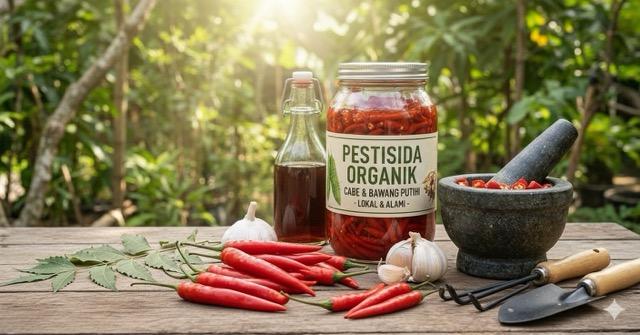
Chili fruit can be used fresh, dried or fermented. One effective method ischili fermentation, because this process helps extract the active compounds and increases the shelf life of the solution.
Commonly used materials include:
-
Red or cayenne pepper
-
Clean water
-
Molasses or brown sugar
-
Microbial activators such as EM4 or mature POC
Fermentation is carried out for several days until the solution smells fresh and sour. After that, the solution is diluted before use so as not to damage the plant leaves.
Advantages and Limitations
Chili pesticides have many advantages, including environmentally friendly, cheap, easily available ingredients, and safe for natural enemies of insects. However, this pesticide also has limitations, such as its relatively short working life and being easily washed off by rain. Therefore, the application needs to be done regularly and at the right time, such as in the afternoon.
Chili fruit has the potential to be used as a natural organic pesticide which is effective for controlling pests and some plant diseases. Containing capsaicin and other bioactive compounds, chilies can act as a natural poison as well as a pest repellent. Proper use of chili pesticides can help farmers reduce dependence on chemical pesticides, maintain ecosystem balance, and increase the sustainability of organic farming.