Biochar-Based Independent Economy
Introduction
Food independence is not only about meeting the food needs of the family or community, but is also closely related to the economic sustainability of farmers. Many farmers face economic constraints due to high fertilizer prices, less fertile land, and unstable crop yields. This is where biochar comes in as an innovative solution.
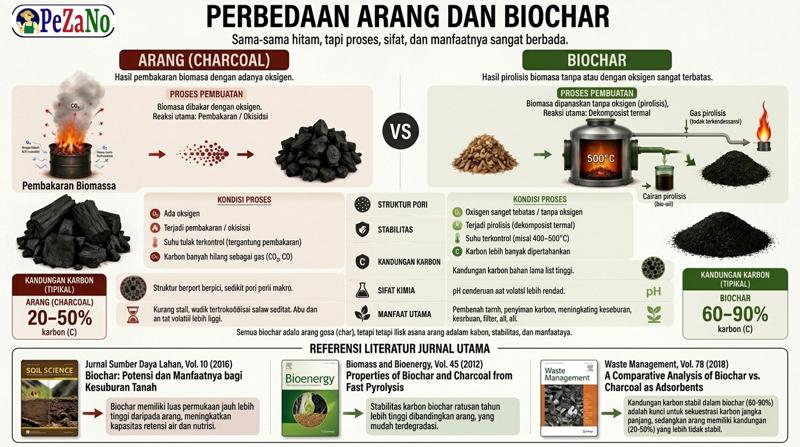
Biochar, apart from being beneficial for soil and plants, has significant economic potential. By utilizing agricultural waste such as rice husks, corn husks, or vegetable waste to make biochar, farmers not only increase land productivity, but also open up new business opportunities. The transformation of waste into high-value products makes biochar one of the keys to an independent, agriculture-based economy.
More than just fertilizer, biochar can be a strategic tool to strengthen the food and economic security of farming communities, so that they no longer depend on expensive external inputs.
Economic Benefits of Biochar
-
Reducing Production Costs
One of the main pressures for farmers is the high cost of production. Chemical fertilizers, pesticides and irrigation costs are large routine expenses. Biochar is able to increase soil fertility naturally and improve soil structure so that the soil is able to retain water longer. This directly reduces the need for additional irrigation and excessive use of chemical fertilizers.
By reducing these costs, farmers can allocate funds for other needs such as purchasing superior seeds, agricultural equipment, or long-term investments. As a result, net profits from agriculture increase without having to add additional land or labor. -
Creates Additional Sources of Income
Biochar itself can be sold as premium organic fertilizer. Many farmers and horticulturists are looking for biochar because it has been proven to improve soil quality and crop yields. Farmers who produce biochar from local waste can sell it to other farmers, farm shops, or agro communities, opening up new income streams.
This additional income not only increases household income, but also provides opportunities for farmers to develop micro businesses, such as biochar processing services or selling mixed organic fertilizers. -
Increasing the Value of Agricultural Products
Plants grown in soil enriched with biochar tend to be healthier, resistant to pests, and have better quality fruit or vegetables. Higher quality harvests usually get higher selling prices in local and organic markets.
For example, organic vegetables grown in soil with biochar have brighter colors, fresher leaves, and more natural flavors. This allows farmers to gain greater economic profits than just selling standard products. -
Reducing Economic Dependence on External Input
With biochar, farmers use their own agricultural waste to improve land. This approach reduces dependence on chemical fertilizers, pesticides, and expensive irrigation services.This independence not only reduces operational costs, but also makes the family economy more stable and more resistant to market price fluctuations.
-
Rice Farmers in Central Java:
Local farmers process rice husks into biochar. Some are used for their own rice fields, some are sold to other farmers. Additional income from selling biochar helps with family living costs, purchasing superior seeds and repairing agricultural equipment. -
Vegetable Farmers in Lembang, West Java:
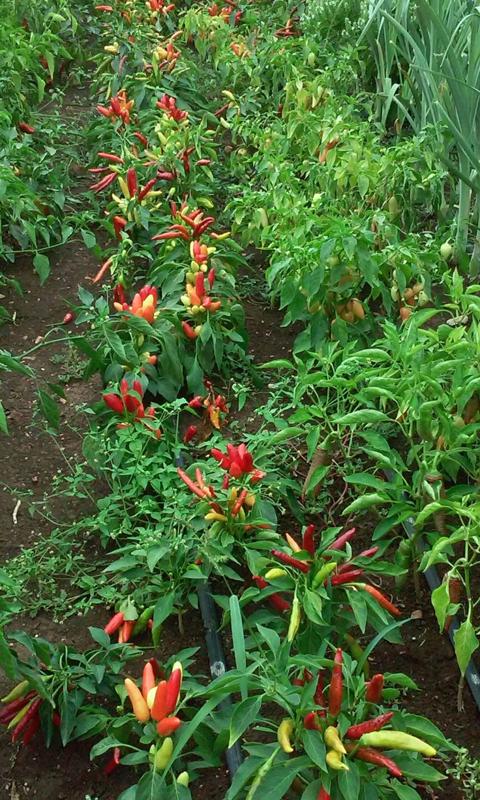
Biochar is used to grow organic vegetables, such as chilies, tomatoes and mustard greens. These organic products are sold at premium prices in local markets and organic supermarkets. Better soil quality produces healthier vegetables, so their selling value increases. -
Agricultural Community in East Nusa Tenggara:
Corn and sweet potato waste is processed into biochar. Apart from increasing their own crop yields, this community gets additional income from selling biochar to neighboring villages. This allows them to build small agricultural cooperatives based on biochar and organic products. -
Micro Initiatives in East Java:
A number of young farmers have formed micro-enterprises that produce biochar from cocoa plantation waste. This product is not only used on their own plantations, but is also marketed to coffee and cocoa farmers in the surrounding area. This business adds economic value to waste that was previously thrown away.
-
Biochar Production Training
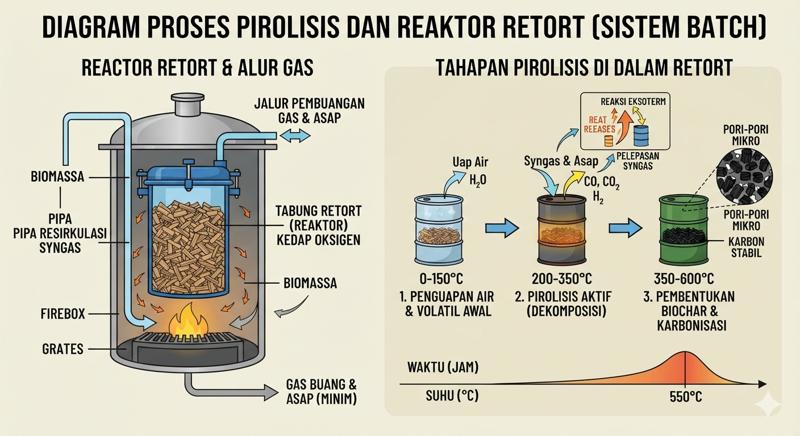
Farmer education on how to make efficient and high-quality biochar is very important. Training can cover simple pyrolysis techniques, organic waste processing, and how to store and apply biochar. -
Marketing Biochar
Farmers can open local markets or join agricultural communities to sell biochar. Marketing can be done directly, through cooperatives, or online to reach a wider range of consumers. -
Integration with Local Agricultural Systems
Combining biochar with sustainable agricultural techniques, such as crop rotation, agroforestry, or compost, can increase land productivity while opening up new economic opportunities. -
Community Collaboration
Farmers can form biochar production groups so that the production scale is larger, costs are more efficient, and distribution is easier. Collaboration also opens up opportunities for joint training, collective marketing and exchange of experiences between members. -
Product Diversification
Biochar can be combined with other organic fertilizers or growing media to create value-added products, such as organic mixed fertilizer, hydroponic growing media, or premium compost mixes.
Biochar is not only an agricultural solution to increase soil fertility, but also a strategic tool for a self-sufficient economy.By utilizing agricultural waste, farmers can reduce production costs, open new sources of income, and improve the quality of their harvests.
The application of biochar strengthens the economic independence of farming families and communities, while supporting local food security. Investment in biochar is an investment in productivity, farmer welfare, and overall agricultural economic sustainability.
With the right strategy, biochar can become the foundation of an independent economy based on sustainable agriculture, while empowering farmers to face economic and environmental challenges in the future.