Lower Carbon Footprint with Biochar: From Farm to Sky
In the midst of increasing concerns about climate change, the world is now looking for solutions to reduce carbon emissions and improve environmental quality. One innovation that is starting to receive widespread attention is biochar — a simple black material, but has the extraordinary ability to maintain soil fertility while absorbing carbon from the atmosphere.
🌱 What is Biochar?
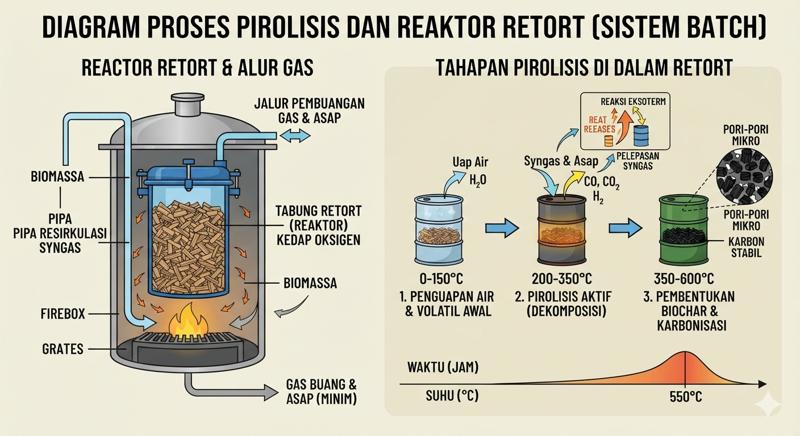
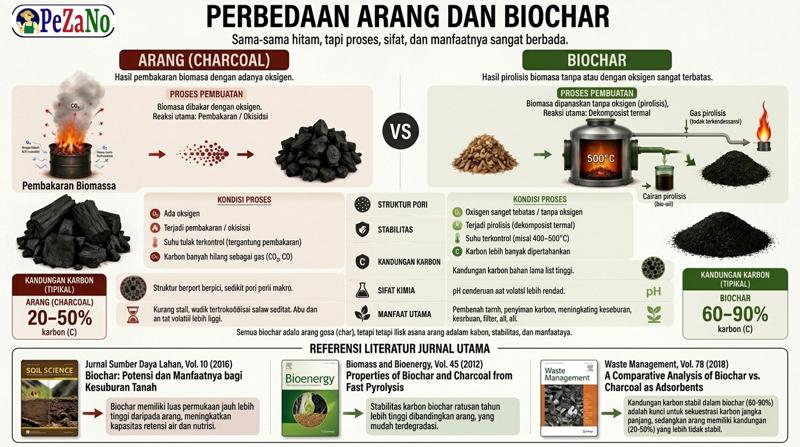
Biochar is biological charcoal which is produced through the pyrolysis process, namely heating organic materials (such as agricultural waste, rice husks, coffee husks, twigs, or wood dust) at high temperatures without oxygen. This process converts biomass into charcoal which is stable and does not decompose easily. Different from ordinary ash or charcoal, biochar has a unique porous structure and is rich in carbon.
🌍 Biochar and the Carbon Footprint
The concept of carbon footprint refers to the amount of greenhouse gas emissions, especially carbon dioxide (CO₂), resulting from human activities. One way to lower your carbon footprint is to store carbon in a stable form in the soil, and this is where biochar plays an important role.
When biomass is processed into biochar, most of the carbon in the material is not released into the air, but is “locked” in the biochar structure for hundreds to thousands of years. In this way, biochar prevents carbon from returning to the atmosphere, helping to curb global warming
🌾 Biochar Benefits for Soil and Plants
Apart from playing a role in mitigating climate change, biochar provides many benefits for the world of agriculture:
-
Improving Soil Fertility — The porosity of biochar makes the soil looser and increases air circulation and water retention.
-
Retains Nutrients — Biochar is able to absorb and release nutrients according to plant needs, thereby reducing nutrient loss due to rainwater washing.
-
Balancing Soil pH — The alkaline nature of biochar helps neutralize acidic soil.
-
Supports Soil Microorganisms — The porous structure of biochar becomes a “home” for microbes that are beneficial for plant growth.
☁️ From Land to Sky: Positive Impacts for Climate
Through the use of biochar, agriculture not only produces healthier crops, but also helps the earth breathe easier. Biochar effectively:
-
Reducing greenhouse gas emissions from decomposition of organic waste.
-
Storing carbon in the soil for the long term.
-
Reducing the use of chemical fertilizers, which is usually a contributor to nitrous oxide (N₂O) emissions.
In other words, the use of biochar creates a cycle of sustainability — from land to sky, where agriculture is part of the solution to climate change, not the cause.
🔬 Towards a Green Future
Wide application of biochar in the agricultural, plantation and organic waste management sectors can be a real step towards a greener future. Through this innovation, every farmer, researcher and community can play a role in reducing the global carbon footprint.
Biochar proves that big solutions for the earth do not always come from advanced technology, but from wise use of the resources we already have. With biochar, the soil becomes more fertile, the air cleaner, and the earth more sustainable.