Environmentally Friendly Agriculture Concept
Introduction
Agriculture is an important sector in human life because it provides food needs. However, agricultural practices that are not environmentally friendly can cause soil damage, water pollution and a decrease in biodiversity. Therefore, the concept of environmentally friendly agriculture is a solution to maintain a balance between food production and nature conservation.
Understanding Environmentally Friendly Agriculture
Environmentally friendly agriculture is an agricultural system that prioritizes sustainability by minimizing negative impacts on the environment. This concept emphasizes the wise use of natural resources, maintaining soil fertility, and protecting the surrounding ecosystem.
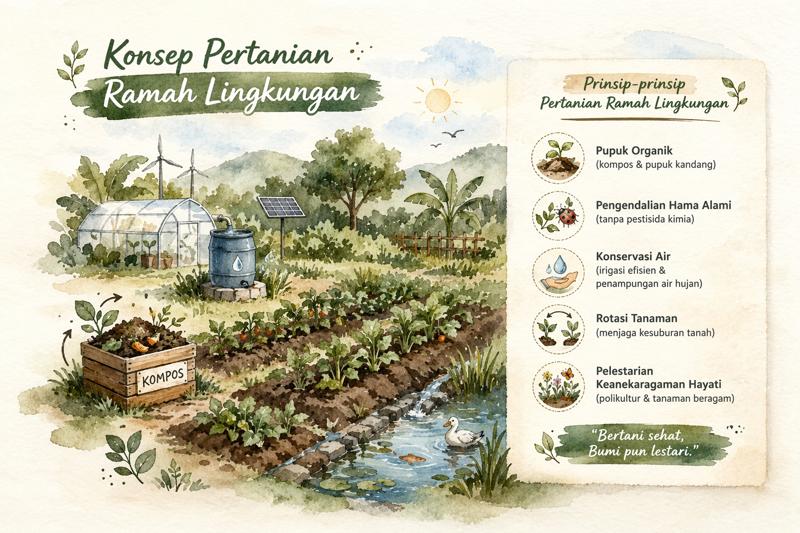
Principles of Environmentally Friendly Agriculture
1. Use of Organic Fertilizer
Organic fertilizers such as compost and manure are used to increase soil fertility without damaging the soil structure. In addition, organic fertilizers also help increase the activity of beneficial microorganisms.
2. Natural Pest Control
The use of chemical pesticides is reduced and replaced with natural methods, such as using natural enemies of pests or using plant-based pesticides.
3. Water Conservation
Water management is carried out efficiently, for example with a drip irrigation system or rainwater harvesting, so that waste does not occur.
4. Crop Rotation
Crop rotation is carried out to maintain soil fertility and prevent repeated pest and disease attacks on the same plants.
5. Biodiversity Conservation
Planting various types of plants (polyculture) helps maintain ecosystem balance and reduces the risk of crop failure.
Benefits of Environmentally Friendly Agriculture
- Maintain soil fertility in the long term
- Reduce environmental pollution
- Produce healthier agricultural products
- Improve ecosystem balance
- Save the use of natural resources
Challenges in Implementation
Even though it has many benefits, environmentally friendly agriculture also faces several challenges, such as:
- Takes longer to see results
- Farmers' knowledge is still limited
- Initial costs are sometimes higher
Conclusion
Environmentally friendly agriculture is an important step in maintaining the sustainability of the agricultural sector. By applying the right principles, farmers can not only increase crop yields, but also preserve the environment for future generations. Therefore, the implementation of environmentally friendly agriculture needs to continue to be encouraged and developed.