Building Food Independence: The Key to Resilience and Prosperity
Introduction
Food independence is the ability of a community or country to meet the food needs of its citizens without relying too much on imports or external assistance. This concept is not only about quantity of production, but also about sustainability, equitable distribution and fair access.
In the midst of climate change, fluctuations in global food prices and population growth, food independence has become an important strategy. Utilizing environmentally friendly technologies and innovations such as biochar can help farmers increase soil productivity and maintain food security.
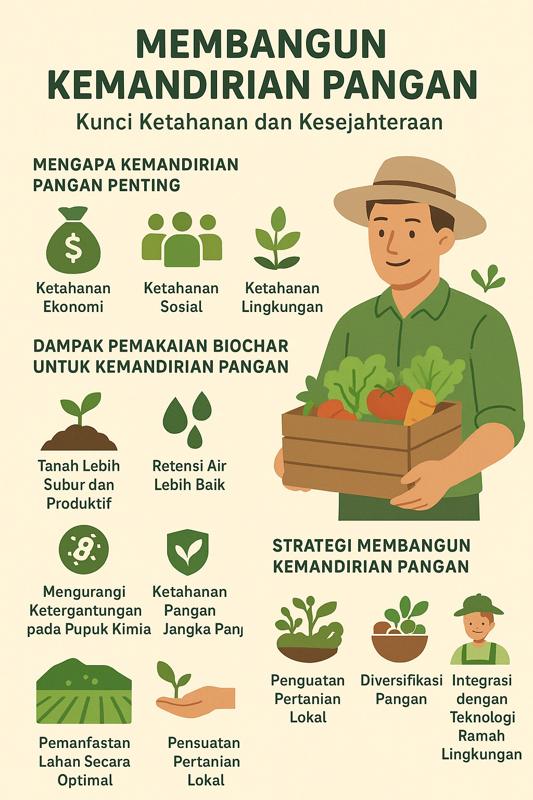
Why Food Independence is Important
-
Economic Resilience
Relying on imported food makes people vulnerable to global price fluctuations. Food independence helps maintain economic stability and supports local farmers. -
Social Resilience
Equitable and sustainable access to food prevents conflict due to food scarcity. -
Environmental Resilience
Sustainable local food production reduces the carbon footprint and keeps the ecosystem healthy.
Biochar has an important role in supporting food independence without having to rely on chemical fertilizers:
-
More Fertile and Productive Soil
Biochar increases soil fertility naturally, making plants absorb nutrients more efficiently, and crop yields increase. -
Better Water Retention
Biochar helps the soil retain water longer, so plants are more resistant to dry seasons and extreme climate changes. -
Supports Soil Microorganisms
Biochar creates an ideal habitat for beneficial microbes that maintain soil fertility and help nutrients be absorbed by plants. -
Reducing Dependence on Chemical Fertilizers
With more fertile soil, the use of chemical fertilizers is reduced, resulting in lower production costs and a safer environment. -
Long Term Food Security
Healthy and productive soil ensures stable harvests, even in uncertain climatic conditions, strengthening community food independence.
Strategy for Building Food Independence
-
Optimal Land Use
Agricultural land, home gardens or urban land can be used to grow vegetables, tubers and local food plants. -
Strengthening Local Agriculture
Support for superior seeds, agricultural technology and training increases productivity while maintaining land sustainability. -
Food Diversification
Planting various types of local and horticultural crops enriches the menu, adds economic value and reduces dependence on one commodity. -
Integration with Environmentally Friendly Technology
The use of biochar and organic fertilizer increases soil fertility, productivity and long-term food security. -
Increasing Community Capacity
The formation of farmer groups and local markets helps distribute products more efficiently, increases farmers' income and strengthens the local economy.
-
Rice Rice Fields in Central Java:
The use of biochar makes rice healthier and fuller grained. The soil remains fertile and productive throughout the season. -
Organic Vegetable Garden in Lembang:
Vegetables such as chilies, tomatoes and mustard greens grow faster and healthier, so selling prices increase in local markets. -
Agricultural Community in East Nusa Tenggara:
Biochar increases water retention and soil fertility, allowing for more stable corn and sweet potato harvests even during long dry seasons.
Food independence is an important strategy for economic, social and environmental resilience. The use of biochar has a real positive impact: soil is more fertile, crop yields are higher, plant resistance to drought increases, and dependence on chemical fertilizers is reduced.
With the right strategies, such as crop diversification, strengthening local agriculture, and environmentally friendly technology, food independence is not just a target, but a reality that brings sustainability and prosperity to farmers and society.