Why Does Soil Need Biochar? Long Term Investment in Soil Fertility
In a modern agricultural system, the biggest challenge is not only increasing production, but maintaining soil fertility in the long term. Many agricultural lands have experienced a decline in quality due to excessive use of chemical fertilizers, erosion, leaching of nutrients, and low organic matter content. One solution that is increasingly being used in sustainable agriculture is biochar.
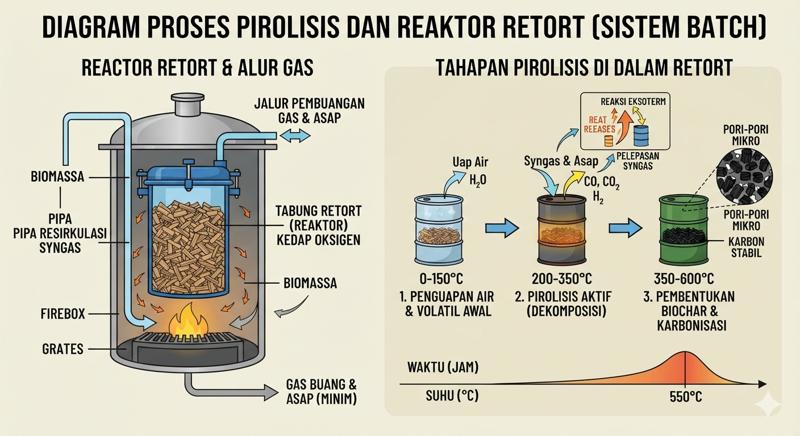
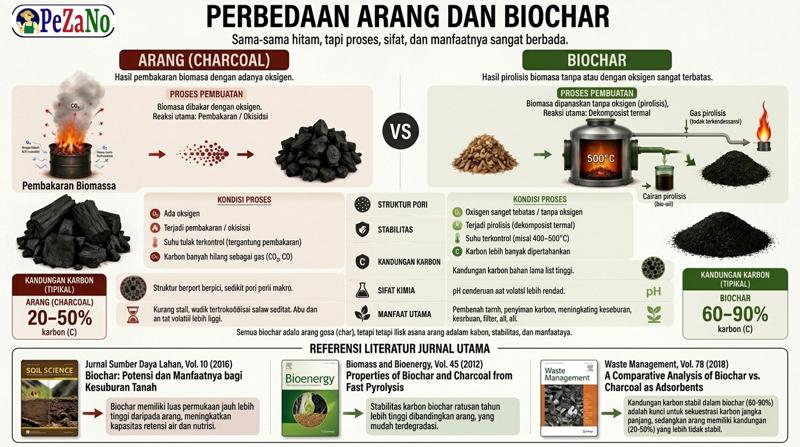
Biochar is biological charcoal resulting from burning biomass such as rice husks, wood, corn cobs, or other agricultural waste through a pyrolysis process (combustion with limited oxygen). Unlike regular charcoal, biochar is designed for soil application, not as fuel. Then, why does soil need biochar?
Improving Soil Structure
Healthy soil has a crumbly, loose structure and has sufficient pore space for air and water. On many soils, especially heavy clay or organic-poor sandy soils, this structure is disrupted.
Biochar has a porous structure like a micro sponge. When mixed into the soil, these pores help:
-
Improves soil aeration
-
Improving drainage
-
Reduce compaction
In sandy soil, biochar helps increase water holding capacity so that the soil does not dry out quickly. On the other hand, in heavy clay soils, biochar helps loosen soil aggregates so that roots can develop more easily.
Increasing Cation Exchange Capacity (CEC)
Soil needs the ability to store and retain nutrients so that they are not easily washed away by rainwater. This ability is called Cation Exchange Capacity (CEC).
Biochar has a large surface area and negative charge which is able to bind nutrients such as:
-
Nitrogen (NH4⁺)
-
Potassium (K⁺)
-
Calcium (Ca²⁺)
-
Magnesium (Mg²⁺)
As the CEC increases, the fertilizer applied does not disappear quickly. Plants can absorb nutrients gradually, so that fertilizer efficiency increases and production costs can be reduced.
Becomes a home for soil microorganisms
Fertile soil depends not only on nutrients, but also on microbial life. Bacteria, fungi and soil organisms play an important role in the decomposition of organic matter and providing nutrients to plants.
Biochar's porous structure provides an ideal habitat for microorganisms. These pores protect microbes from predators and extreme temperature changes. As a result:
-
Soil biological activity increases
-
The nutrient mineralization process is more stable
-
The land becomes more alive and dynamic
In the long term, the presence of healthy microbes makes soil more resilient to environmental stress.
Stabilizing Carbon and Reducing Emissions
One of the main advantages of biochar is its carbon stability. In contrast to compost or manure which decomposes relatively quickly, the carbon in biochar is very stable and can last tens to hundreds of years in the soil.
This provides two benefits at once:
-
Storing carbon in the soil (carbon sequestration)
-
Reducing greenhouse gas emissions from the agricultural sector
In other words, biochar not only improves the soil, but also contributes to climate change mitigation.
Reduces Soil Acidity
Many tropical agricultural lands have acid soil problems. Low pH can inhibit the availability of phosphorus and increase the solubility of aluminum which is toxic to roots.
Biochar is generally slightly alkaline, especially that derived from wood biomass or rice husks. When applied, biochar can help:
-
Neutralize soil acidity
-
Increases phosphorus availability
-
Reduces aluminum toxicity
However, this effect still depends on the type of biochar and application dose.
Long Term Effects for Years
In contrast to humic acid or liquid organic fertilizer which has a fast but relatively short effect, biochar works slowly but is long-lasting. Once applied in the correct dose, the benefits can last for years.
Biochar is not “instant medicine” for plants. In the first week you may not see any significant changes. However, within one to several planting seasons, the improvement in soil quality will become more apparent.
Because of its high stability, biochar is often referred to as a long-term investment in soil fertility.
Reducing Dependence on Chemical Fertilizers
By increasing the soil's ability to store water and nutrients, the need for chemical fertilizers can be reduced. Plants become more efficient at absorbing nutrients.
In sustainable agricultural systems, biochar is often combined with:
-
Compost
-
Liquid organic fertilizer
-
Humic acid
Biochar functions as a “storage”, while other organic materials act as “quick providers”. This combination creates a balanced system between short-term and long-term effects.
Soil needs biochar because it provides a comprehensive solution to various soil fertility problems: improving structure, increasing nutrient holding capacity, supporting microbial life, stabilizing carbon, and providing long-term, sustainable effects.
In land conditions that continue to experience degradation, biochar is not just an addition, but a fundamental soil improvement strategy. With the right approach—appropriate dosage and combined with other nutrient sources—biochar can be an important foundation for a productive, efficient and environmentally friendly agricultural system for the future.