Erasing Dependency: Biochar as the Foundation of Super Resilient Agriculture
Modern agriculture is often caught in a cycle of dependency: dependence on imported chemical fertilizers, dependence on abundant irrigation water, and dependence on pesticides to overcome crop vulnerabilities. This dependency makes our food system vulnerable to rising global prices and climate change.
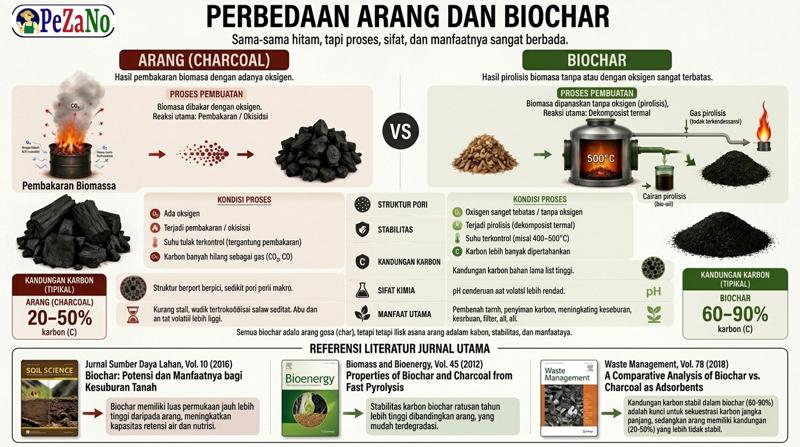
Biochar, carbon-rich black charcoal produced from waste biomass, offers a revolutionary solution. More than just a soil conditioner, biochar is the foundation that builds a super resilient agricultural system, fundamentally breaking the chain of dependency and securing the future of national food.
I. Breaking Dependence on Imported Chemical Inputs
One of the biggest vulnerabilities of agriculture is dependence on inorganic fertilizers, the prices of which fluctuate and are mostly imported. Biochar addresses this problem through nutritional efficiency mechanisms:
1. Maximizing Fertilizer Efficiency
Biochar acts as a nutrient magnet. The surface of the pores has an electrical charge that is able to bind important nutritional ions such as nitrogen and phosphorus. Thus, when fertilizer is applied, the nutrients are not immediately lost or washed away by water, but remain available in the plant root zone for a longer period of time.
-
Impact: Farmers can gradually reduce the dose of chemical fertilizer needed to get the same crop yield, reduce operational costs, and reduce imports of the country's fertilizer raw materials.
2. Increasing Cation Exchange Capacity (CEC)
CEC is a measure of the soil's ability to store and provide nutrients. Biochar has a very high CEC. By increasing soil CEC, biochar ensures that local soil is able to become a long-term nutrient reservoir, not just a passive growing medium.
II. Building Resilience to Climate Change (Water Dependence)
An increasingly uncertain climate, characterized by long droughts and extreme rainfall, demands agriculture that is more resilient to water stress.
1. Primary Defense Against Drought
The porous structure of biochar resembles a micro sponge. One gram of biochar can have a surface area of up to hundreds of square meters. When mixed into soil:
-
Increases Water Retention: Biochar dramatically increases the water holding capacity of the soil. This means plants have access to longer water reserves during periods of drought.
-
Reduces Plant Stress: Plants grown in biochar-treated soil show fewer symptoms of drought stress, which in turn maintains crop yield stability.
2. Optimal Drainage and Aeration
During high rainfall, the biochar pores ensure good aeration and prevent water stagnation which can damage the roots (lack of oxygen). This shows the double toughness of biochar, effective in both wet and dry conditions.
III.Biochar As The Foundation Of Local Sustainable Agriculture
Utilization of biochar supports food independence from upstream to downstream by maximizing local resources:
1. Local Waste Empowerment
The raw material for biochar is local biomass, such as rice husks, sugar cane harvest residue, or corn cobs. This converts previously incinerated (and polluting) waste into high value-added products. The biochar production process can be carried out decentralized at the farmer group level, empowering rural communities
2. Soil Health Natural Partners
Biochar not only provides nutrition, but also provides an ideal habitat for beneficial microorganisms. Biologically healthy soil is better able to resist pathogens, reduces dependence on pesticides, and promotes natural nutrient cycles.
3. Long Term Investment in Carbon
Biochar is very stable in the soil and can last for hundreds of years. By applying it, we effectively embed carbon into the soil (carbon sequestration). This is a dual investment: improving the soil today, while contributing to long-term climate change mitigation.
Conclusion
Biochar is a catalyst that frees agriculture from dependency. By reducing dependence on expensive fertilizers and increasing resilience to water crises, biochar transforms agriculture into a system that is super resilient, based on local resources, and environmentally friendly.
To achieve sustainable food independence and full sovereignty over the food system, widespread integration of biochar technology is imperative. This is a strategic step to ensure stable food production, advance farmers' welfare, and safeguard Indonesia's environmental sustainability.