Use of Biochar During Extreme Hot Temperatures
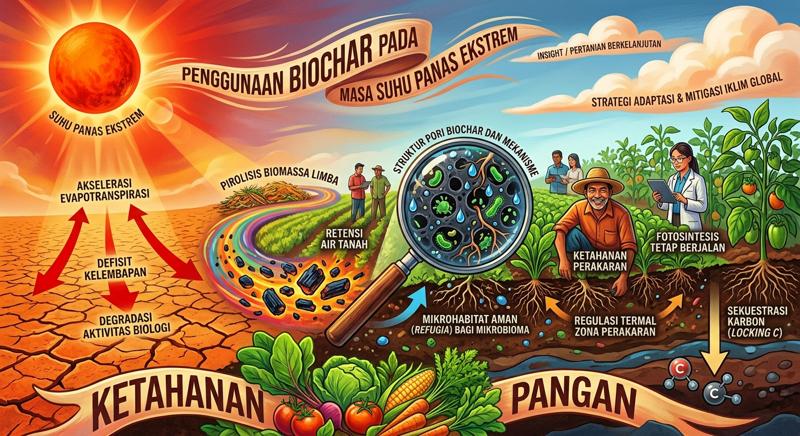
The increasing frequency and intensity of heat waves due to global climate change poses a serious threat to the sustainability of the agricultural sector. The phenomenon of extreme heat not only increases ambient air temperature, but also triggers a drastic spike in ground temperature. This excessive increase in soil temperature has a direct impact on accelerating the rate of evapotranspiration, increasing the moisture deficit, and reducing the physical and biological quality of the soil. When the soil temperature exceeds the plant's optimal tolerance limit, the physiological function of the roots will be significantly disrupted, stopping nutrient absorption, and ultimately reducing crop productivity massively.
This increasingly challenging condition demands the presence of a soil adaptation strategy based on sustainable soil improvement innovation. One of the most promising soil amendment materials in mitigating environmental stress is biochar. Biochar is a carbon-rich solid produced from the thermochemical pyrolysis process, namely the burning of organic material or agricultural waste biomass under conditions of limited oxygen or no oxygen at all. The recursive pore structure, high chemical stability and very large specific surface area make biochar a vital instrument in maintaining soil health in the face of extreme heat waves.
The effectiveness of biochar application in reducing the negative impacts of extreme heat stems from its unique physical and chemical characteristics. One of the most damaging implications of extreme temperatures is soil drying triggered by high evaporation rates. Biochar has a very intensive micropore and mesopore structure, so it acts like a natural sponge in the soil matrix. When applied, biochar increases the soil's capacity to hold capillary water. Water trapped in the pores of biochar does not easily evaporate due to heat from the sun, so it remains available to the plant root system for a longer period of time. This effectively extends plant resistance to water crises in the dry season and during heat waves.
Apart from maintaining water availability, biochar also plays an important role in thermal regulation and physical stability of soil. Soil temperatures that are too high can damage soil aggregation and increase compaction. The application of biochar modifies the thermal conductivity properties of the soil so that it has a better specific heat capacity. This situation is able to reduce drastic daily fluctuations in soil temperature, keeping the root zone (rhizosphere) within a temperature range that is relatively more stable and can be tolerated by plant tissue.
On the biological side, biochar provides real protection for communities of soil microorganisms such as phosphate solubilizing bacteria and mycorrhiza which are very susceptible to protein denaturation due to exposure to high temperatures. The internal porosity of biochar provides a safe microhabitat (refugia) for the soil microbiome from exposure to direct heat and dry conditions. By protecting the microbial population, the process of nutrient cycling, decomposition of organic material, and the symbiotic relationship between roots and fungi can continue even though external environmental conditions are very unfavorable.
Indirectly, improving the soil environment by biochar has a positive impact on plant physiology. Plants grown in biochar soil showed lower levels of oxidative stress, more controlled transpiration rates, and better stomatal resistance. This allows the photosynthesis process to continue running even at minimum efficiency, preventing tissue death or permanent wilting in plants.
In addition to the benefits of local adaptation, the use of biochar also contributes to global climate mitigation through carbon sequestration. The carbon contained in biochar is very stable and resistant to microbiological decomposition for hundreds of years. By locking carbon in the soil, the application of biochar simultaneously reduces greenhouse gas emissions into the atmosphere and helps reduce the rate of global warming which is the root cause of extreme heat waves.
Overall, the use of biochar during times of extreme heat is a very relevant strategic step in efforts to maintain food security and preserve the agricultural ecosystem. Through its ability to increase water retention, stabilize soil temperature, and protect microbial biodiversity, biochar has proven to be an effective buffer for soil against severe environmental stress. The integration of biochar applications into sustainable agricultural governance should be prioritized as part of long-term climate adaptation plans.
Bibliography
-
Kammann, C. I., Luster, J., Uster, N., Weller, S., & Joseph, S. (2015). Biochar as a tool to mitigate the impacts of drought and heat stress on crops: A review. Journal of Plant Nutrition and Soil Science, 178(5), 684–698.
-
Lehmann, J., & Joseph, S. (Eds.). (2015).Biochar for Environmental Management: Science, Technology and Implementation (2nd ed.). London: Routledge.