The Role of Biochar in Sequestering Carbon and Overcoming Global Warming
Climate change and global warming are one of the biggest challenges facing the world today. The increase in earth temperature caused by greenhouse gas emissions, especially carbon dioxide (CO₂), has caused various negative impacts such as extreme weather, drought, floods and reduced agricultural productivity. Therefore, various efforts are being made to reduce the amount of carbon in the atmosphere and maintain environmental balance. One innovation that is increasingly receiving attention is the use of biochar as a carbon absorbent medium as well as improving soil quality.
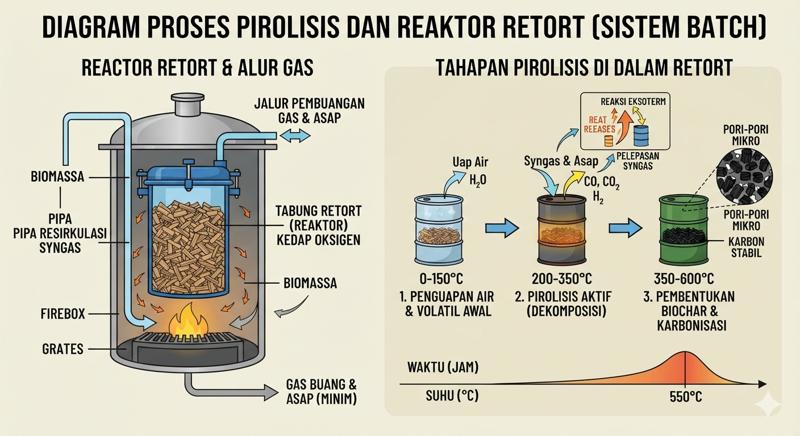
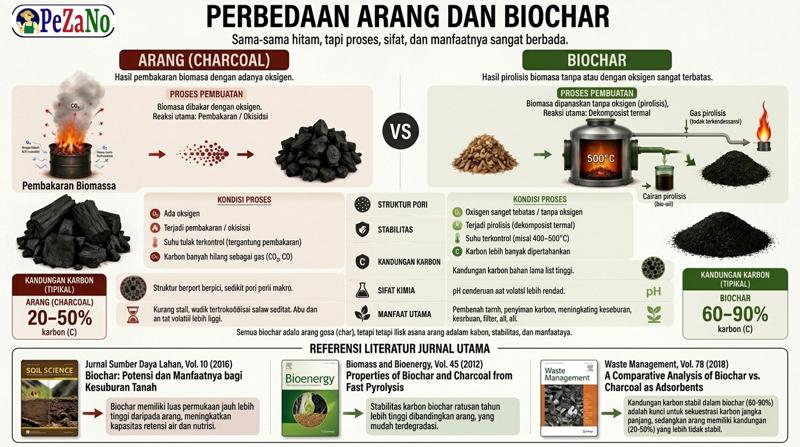
Biochar is a carbon-rich material produced through the pyrolysis process, namely burning biomass such as straw, rice husks, wood waste, coconut shells, or plant residues in conditions of minimal oxygen. This process produces special charcoal which has a porous structure and is capable of storing carbon for a very long period of time. In contrast to regular burning which releases carbon into the atmosphere, biochar production actually helps lock carbon in the soil so that it does not return to greenhouse gases.
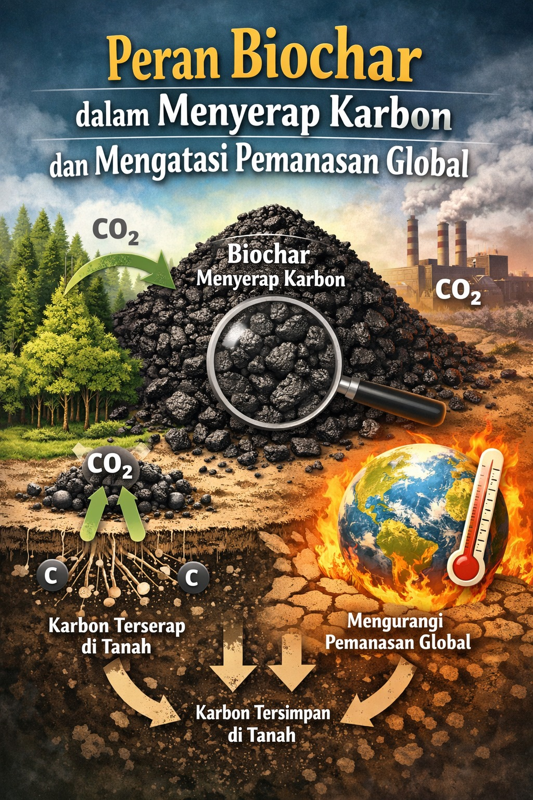
One of the main advantages of biochar is its ability to absorb and store carbon. When plants grow, they absorb carbon dioxide from the atmosphere through the process of photosynthesis. The carbon is then stored in plant tissue. If plants or agricultural waste are burned openly, carbon will be released back into the air in the form of CO₂. However, if the waste is processed into biochar, most of the carbon can be retained in a stable form and stored in the soil for hundreds to thousands of years. Thus, biochar acts as an effective carbon storage technology to help reduce greenhouse gas concentrations in the atmosphere.
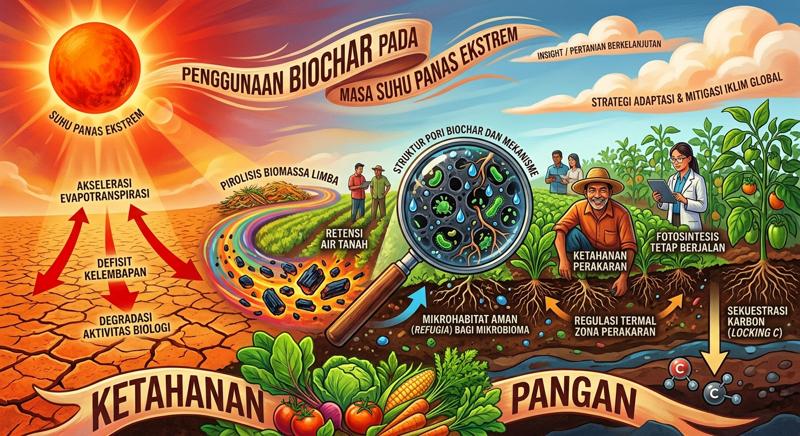
Aside from functioning as a carbon sink, biochar also provides great benefits for the agricultural sector. The porous structure of biochar can increase the soil's ability to retain water and nutrients. This is very important, especially in areas that are vulnerable to drought due to climate change. Soil treated with biochar tends to have better water storage capacity so that plants can survive longer in conditions of water shortage. Apart from that, the nutrients contained in the soil are not easily washed away by rainwater so they can be utilized optimally by plants.
The use of biochar also helps increase the activity of soil microorganisms which play an important role in maintaining land fertility. The pores in biochar are an ideal living place for various beneficial microorganisms. The presence of these microorganisms can help the decomposition process of organic material, increase nutrient availability, and support healthier plant growth. By improving soil quality, agricultural productivity can be maintained even in increasingly challenging environmental conditions due to climate change.
In Indonesia, the potential for developing biochar is very large because of the abundance of biomass waste from the agricultural and plantation sectors. Rice husks, corn cobs, straw, sawdust and coconut shells are some examples of raw materials that can be used to produce biochar. Utilizing this waste not only reduces environmental pollution due to open burning, but also provides added value for farmers and the community.By processing waste into biochar, materials previously considered useless can be turned into products that are beneficial for agriculture and the environment.
Even though it has many benefits, the application of biochar still faces several challenges. One of them is the lack of public knowledge regarding the manufacturing process and benefits of biochar. In addition, adequate biochar production equipment is not evenly available in various regions. Therefore, support is needed from the government, research institutions and the education sector to increase socialization and development of biochar technology that is easy for the community to apply.
Research on biochar also continues to develop. Scientists found that long-term use of biochar can improve soil health, reduce the need for chemical fertilizers, and help reduce greenhouse gas emissions from agricultural land. The results of this research show that biochar is not only beneficial for the environment, but also provides economic benefits for farmers through increasing crop yields and efficient use of fertilizer.
In conclusion, biochar is an innovation that has an important role in efforts to overcome global warming and climate change. Its ability to absorb and store carbon makes it an effective solution for reducing greenhouse gas emissions. Apart from that, biochar is also able to improve soil quality, support agricultural productivity, and utilize biomass waste more sustainably. With support from various parties and wider application, biochar has the potential to become an environmentally friendly technology that helps create a greener and more sustainable future for future generations.