ABC Agriculture Helps Farmers Face Today's Extreme Climate Change
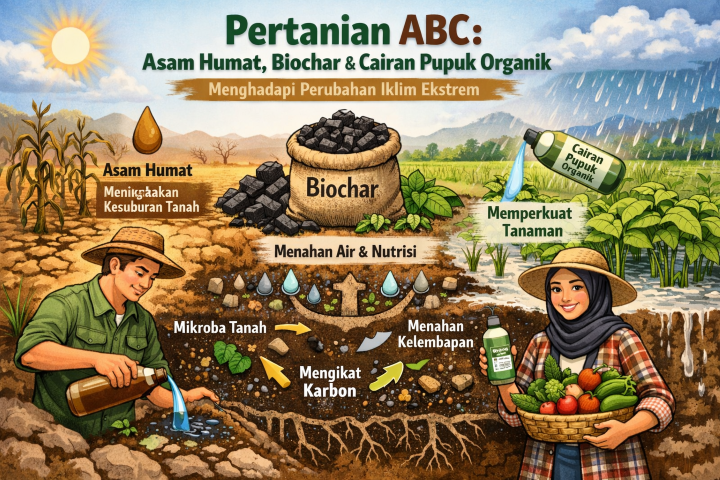
Extreme climate change is now a real challenge for farmers in various regions. Erratic rainfall, increasingly long dry seasons, rising air temperatures, and increasingly difficult to predict pest and disease attacks have affected agricultural productivity. Phenomena such as El Nino, which triggers long droughts, and La Nina, which causes excessive rainfall, increasingly show that conventional agricultural systems need to adapt. In this context, the concept of ABC Agriculture—Humic Acid, Biochar, and Liquid Organic Fertilizer—is present as an innovative solution to help farmers face extreme climate change in a more resilient and sustainable manner.
ABC farming is an approach based on improving soil quality and increasing plant resistance through the use of natural ingredients. The main focus is to strengthen the foundation of the agricultural ecosystem, namely soil as the main growing medium. Healthy soil has a better ability to store water, provide nutrients, and support the activity of beneficial microorganisms. By improving soil quality, farmers can minimize the negative impact of extreme weather changes on crops.
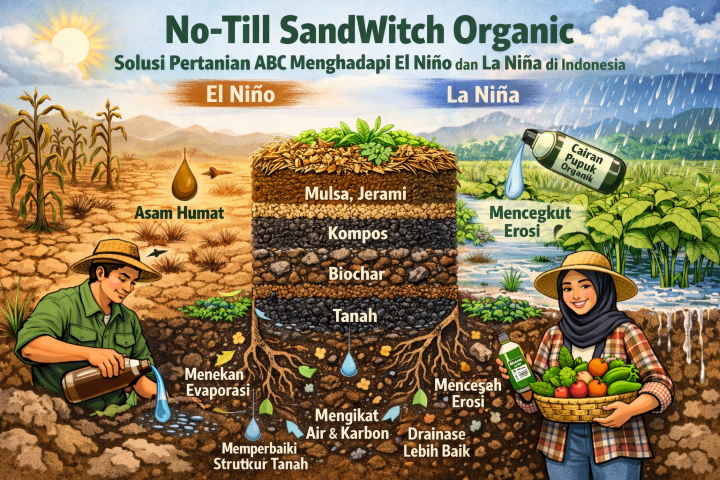
Humic acid is one of the important components in ABC Agriculture. These organic compounds come from the weathering of organic materials and have a big role in increasing soil fertility. Humic acid helps improve soil structure, increases cation exchange capacity, and increases the soil's ability to bind water and nutrients. In long dry seasons, soil enriched with humic acid is able to retain moisture longer so that plants do not easily experience drought stress. On the other hand, during the rainy season with high rainfall, the looser soil structure helps facilitate drainage and prevent excessive flooding.
The second component is biochar, namely biological charcoal produced from the pyrolysis process of organic materials such as rice husks, wood waste or plant residues. Biochar has a porous structure which is very effective in absorbing and storing water and nutrients. When mixed into the soil, biochar increases the soil's ability to retain moisture, making it very helpful during droughts due to climate change. Apart from that, biochar also functions as a habitat for beneficial soil microorganisms, which play a role in the decomposition process and provide nutrients for plants.
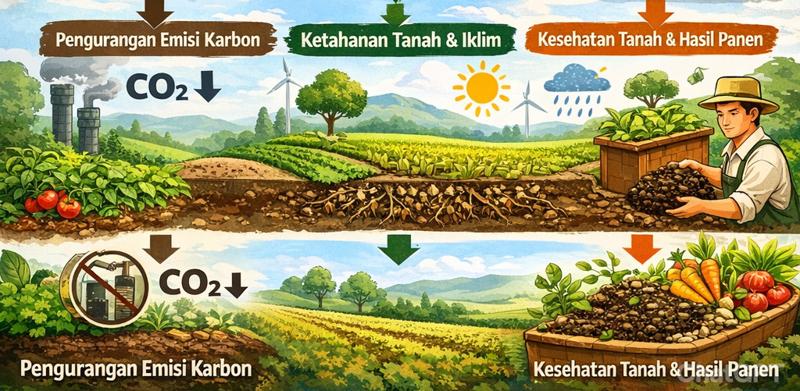
Another advantage of biochar is its ability to reduce carbon emissions into the atmosphere. The carbon contained in biochar is stored stably in the soil for a long time. Thus, the use of biochar not only helps farmers increase productivity, but also contributes to mitigating climate change globally. This makes ABC Agriculture an approach that is aligned with the principles of sustainable agriculture.
The third component is liquid organic fertilizer, which functions as a source of additional nutrition for plants. In contrast to chemical fertilizers which often have a negative impact on soil structure if used excessively, liquid organic fertilizers enrich the soil with macro and micro nutrients more naturally. This fertilizer also contains microorganisms that help increase the biological activity of the soil.In extreme weather conditions, plants that receive a balanced nutritional intake tend to have stronger root systems and higher resistance to environmental stress.
The synergy between humic acid, biochar and liquid organic fertilizer creates a more resilient agricultural system. The soil becomes more fertile and stable, the ability to hold water increases, and the availability of nutrients is better maintained. This is especially important when farmers have to deal with climate fluctuations that are difficult to predict. With healthier soil conditions, the risk of crop failure can be reduced, and land productivity is maintained even when the weather is unfavorable.
In addition to agronomic benefits, ABC Agriculture also has a positive economic impact for farmers. Many raw materials for biochar and liquid organic fertilizer can be obtained from local agricultural waste, so production costs can be reduced. Reducing dependence on imported chemical fertilizers also helps maintain the stability of farming costs. In the long term, increasingly fertile land will consistently increase crop yields, resulting in more stable farmer incomes.
The implementation of ABC Agriculture also encourages farmers to better understand the importance of maintaining the balance of the agricultural ecosystem. By prioritizing organic materials and natural processes, this approach reduces land degradation which has been one of the causes of declining agricultural productivity. Healthy soil not only supports current harvests, but is also an investment for future generations.
In the midst of the increasingly real threat of climate change, farmers need practical, affordable and sustainable solutions. ABC Agriculture offers answers through a simple yet high-impact approach. By strengthening soil quality through humic acid, biochar and liquid organic fertilizer, farmers can face the challenges of extreme climates with more confidence. This transformation not only maintains food security, but also paves the way towards a more resilient and environmentally friendly agricultural system in the future.