ABC Agriculture Without Animal Manure: A Regenerative Solution Based on Vegetable Resources
The concept of ABC Agriculture (Humic Acid, Biochar, and Liquid Organic Fertilizer) is increasingly developing as an environmentally friendly approach to increasing productivity while maintaining land sustainability. Interestingly, this system can be run without using animal waste, making it suitable for farmers who do not have access to livestock or want to develop completely vegetable-based agriculture.
ABC farming without animal waste emphasizes optimizing organic materials from plant waste, harvest residues, weeds and other biological sources. This system maintains the main principles: improving soil structure, increasing nutrient availability, strengthening plant resistance, and contributing to climate protection.
The Role of Humic Acid in Manure-Free Systems
Humic acid is the result of the decomposition of organic materials that have undergone a long weathering process. In systems without animal waste, humic acid can be obtained from the extraction of plant compost, lignite, or other sources of plant organic matter.
The main function is to improve the chemical properties of the soil. Humic acid helps increase cation exchange capacity (CEC), so that nutrients such as nitrogen, phosphorus and potassium are more easily absorbed by roots. Apart from that, humic acid also stimulates root growth and increases the activity of soil microorganisms.
In practice, humic acid is applied by mixing or mixing it into irrigation water. The effects are visible relatively quickly, especially in the early phases of plant growth. Plants appear greener, the root system is stronger, and resistance to environmental stress increases.
Biochar: Stable Foundation of Regenerative Soil with Long-Term CEC
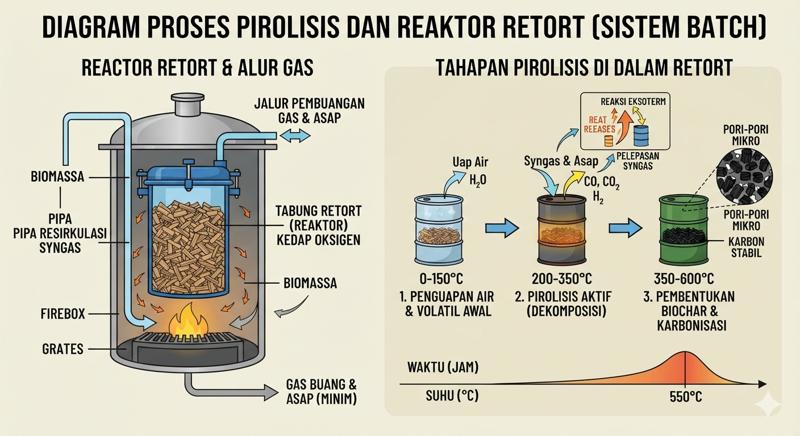
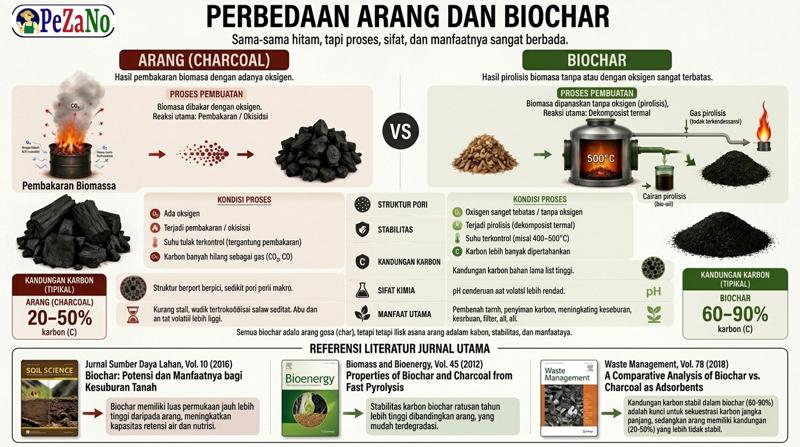
The second component, biochar, is the backbone of the ABC Agriculture system. Biochar is produced through the pyrolysis process of biomass waste such as rice husks, corn stalks or wood twigs, without involving animal waste.
The advantage of biochar lies in its complex pore structure. This structure allows the soil to have good aeration as well as the ability to retain water for longer. In the rainy season, biochar helps prevent leaching of nutrients; while in the dry season, it keeps soil moisture stable.
Apart from that, biochar also has the ability to increase CEC in the long term. Over time, the biochar surface will experience a natural oxidation process and microorganism colonization. This process forms active functional groups on its surface which are able to bind cations such as calcium (Ca), magnesium (Mg), potassium (K), and ammonium (NH₄⁺). This means that biochar not only improves the physical structure of the soil, but also acts as a stable and long-lasting nutrient store.
Unlike fresh organic material which decomposes quickly, biochar can survive in the soil for tens or even hundreds of years. Thus, the increase in CEC due to biochar is more permanent than the temporary effect of easily decomposed organic materials.
In addition to its agronomic function, biochar plays a role as long-term carbon storage. The carbon trapped in biochar can persist for a long time in the soil, helping to reduce carbon concentrations in the atmosphere and supporting climate change mitigation.
Vegetable Based Liquid Organic Fertilizer
One of the challenges of a system without animal waste is providing sufficient macronutrients. However, this can be overcome by making vegetable-based organic liquid fertilizer. The raw materials can come from fermented green leaves, market vegetable waste, rice washing water, sugar cane molasses, and local microorganisms (MOL).
This fermentation produces a solution rich in nutrients and beneficial microbes. When applied regularly through foliar spraying or soil mulching, liquid organic fertilizer is able to maintain plant nutritional balance.
In the ABC system, liquid organic fertilizer also functions to “activate” biochar before application. Biochar that is soaked in a solution of organic fertilizer or humic acid will be filled with nutrients and microbes, so that when it is added to the soil it does not suddenly absorb plant nutrients.
Environmental Benefits and Climate Resilience
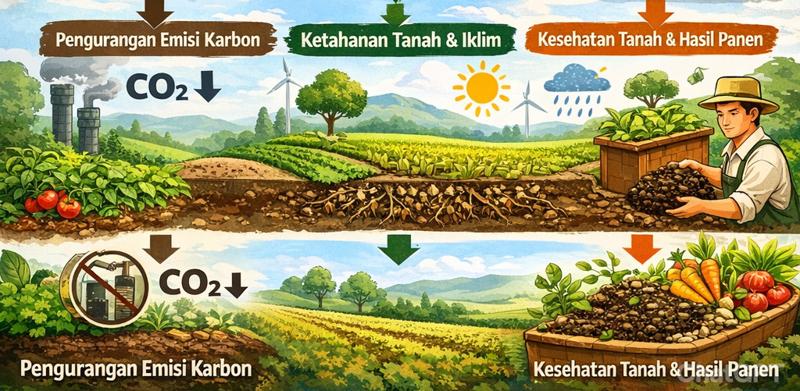
ABC farming without animal waste provides a number of strategic benefits. First, this system reduces dependence on synthetic chemical fertilizers. Second, the use of plant waste as the main material helps reduce open burning which is often a source of carbon emissions.
Soil managed with a combination of humic acid, biochar, and organic vegetable fertilizer will have a looser structure, a more balanced microbial population, and higher nutrient retention capacity thanks to an increase in short and long-term CEC. In the long term, this condition increases productivity without damaging the soil ecosystem.
This system is also more hygienic because it does not involve animal waste, so the risk of pathogens can be minimized. This is especially important for the cultivation of leaf vegetables and horticulture which are consumed fresh.
Towards Independent and Sustainable Agriculture
ABC farming without animal waste shows that sustainability does not always depend on livestock resources. With innovations based on vegetable biomass, increasing CEC through humic acid and biochar, as well as proper nutritional management, farmers can build an independent regenerative agricultural system.
In facing the challenges of climate change, this approach offers better resilience to extreme rain and drought. Soil rich in biochar and humic materials is the main foundation for stable food production.
Finally, ABC Agriculture without animal waste is not just an alternative, but a long-term strategy towards low-emission, productive agriculture and in harmony with the balance of nature.