Sustainable Agriculture with Biochar
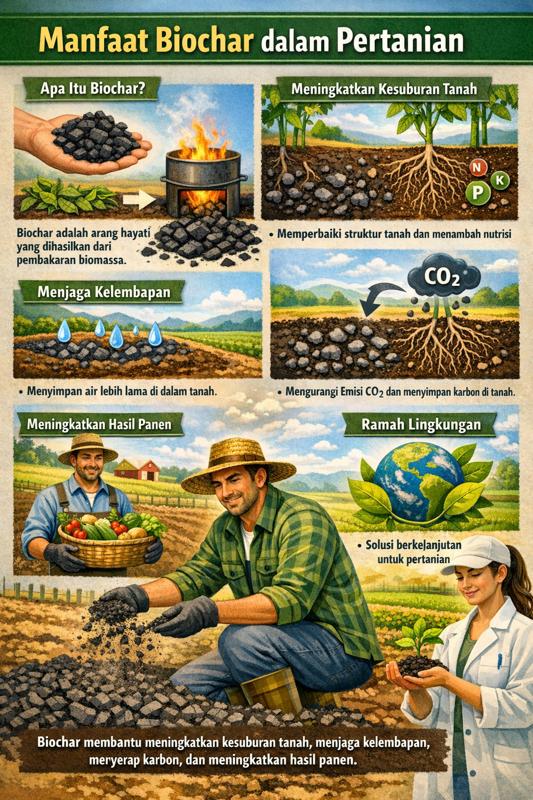
Biochar is charcoal produced from burning biomass such as agricultural waste, wood or leaves in conditions of minimal oxygen. In recent years, biochar has become an important innovation in sustainable agriculture because of its ability to improve soil structure, increase fertility and reduce carbon emissions.
Benefits of Biochar in Agriculture
-
Increases soil fertility: Biochar has pores that can hold water and nutrients, so plant roots can absorb them more efficiently.
-
Reduces the use of chemical fertilizers: With biochar, the need for synthetic fertilizers is reduced because the soil becomes more fertile naturally.
-
Reduces greenhouse gas emissions: Biochar stores carbon in a stable form in the soil, helping to reduce CO₂ emissions.
-
Improves soil structure:Dense soil becomes looser and has good aeration, supporting root growth.
Implementation of Biochar in the Field
Farmers can make biochar from local organic waste using a simple pyrolysis method. Once produced, biochar is mixed with compost or manure before being applied to the land. As a result, plants grow healthier, productivity increases, and the soil becomes more resistant to drought.
Environmental and Social Impacts
The use of biochar not only increases agricultural yields but also supports a circular economy in rural areas. Previously useless waste has now become a high-value resource. Thus, biochar becomes a real solution for productive and environmentally friendly agriculture.