Pezano and Pokdartik Build INT8 AI Model with 128k Parameters: Bringing Local Agricultural Artificial Intelligence into ESP32
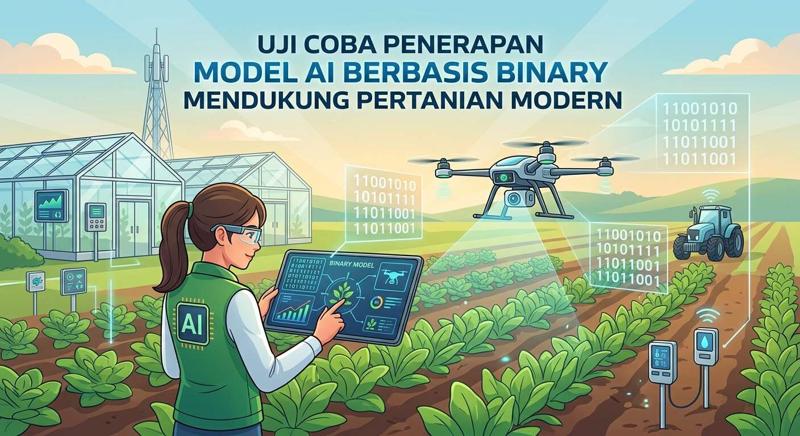
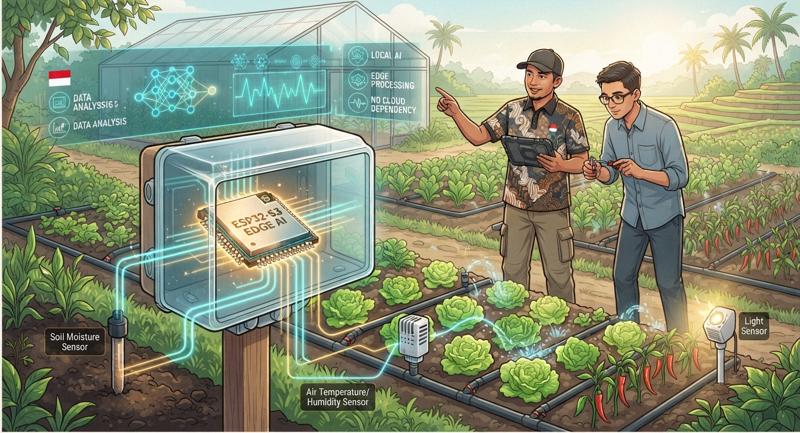
After successfully developing the WITIAI 4BIT AI Model with the QNM format pattern approach, POKDARTIK (ICT Aware Community Group) together with Pezano (Today's Farmers) have once again made brilliant achievements in the field of appropriate technology. This time, the collaboration between the digital literacy community and modern agricultural activists succeeded in realizing an agricultural Internet of Things (IoT) based on artificial intelligence (AI) that runs locally—directly on theESP32's System on Chip (SoC) microprocessor.
From WITIAI 4BIT to INT8 Architecture (128k Parameters)
The development step of the INT8 model with a capacity of 128k parameters marks an important evolution from previous experiments on WITIAI 4BIT with the QNM format pattern. While ultra-low quantization approaches such as 4-bit served as a proof of concept that lightweight AI inference can be engineered efficiently, the transition to INT8 provides a more mature balance between memory efficiency, integer computing speed, and response precision in field scenarios.
With 128k parameters, the model is designed to remain compact and scalable for low-power edge environments. Instead of relying completely on cloud servers that require a stable internet connection and ongoing subscription fees, processing is done directly on the device in the garden or cultivated area.
Why is Running Local AI on an ESP32 SoC Crucial?
In many agricultural areas, network connectivity is often uncertain, expensive, or does not even reach sensor points in the middle of the field. Embedding AI models directly into the ESP32 SoC brings a number of practical advantages:
-
Real-Time Response Without Network Latency: Sensor readings—such as soil moisture, air temperature, light intensity, or microclimatic conditions—can be analyzed instantaneously at field nodes to trigger actuators (e.g., drip irrigation, circulation fans, or early warning systems).
-
Operational Resilience in Low Signal Areas: The system can still make intelligent decisions even if the connection to the internet is temporarily lost.
-
Power Efficiency and Device Cost: ESP32 is known to be energy efficient and affordable, making it suitable for replication in large quantities as an IoT network for agricultural nodes for communities and independent farmers.
-
Local Data Sovereignty: Land data patterns and decision-making logic are stored and processed closer to the source.
POKDARTIK and Pezano Collaboration: Bridging Code and Land
The main strength of this initiative lies in the confluence of two complementary ecosystems. POKDARTIK plays a role in encouraging information technology literacy, optimization of edge AI models, as well as integration of microcontroller hardware and firmware. Meanwhile,Pezano provides real-world context from the world of agriculture—ensuring that every parameter, threshold, and automation scenario truly addresses the needs of farmers in the field.
Through an iterative approach from WITIAI 4BIT (QNM) to INT8 128k parameter models, this collaboration shows that Artificial Intelligence and IoT innovations do not always have to be expensive or complicated. By designing precise models and utilizing hardware such as ESP32, artificial intelligence can become a practical, adaptive and sustainable work aid for today's agriculture.