Slow Soil Movement — A Quiet Revolution from Under the Soil
In a fast-paced world, we are used to wanting instant results.
Plant today, harvest tomorrow. Today's post went viral last night.
But behind all that speed, there is one thing that cannot be caught: the ground.
Land cannot be forced. He works at his own rhythm — slow, steady, and honest.
And there a new movement was born called the Slow Soil Movement — a movement that invites us to stop for a moment, listen to the earth, and start from the root of the problem: soil fertility.
From Ashes to Life
Biochar is the main star.
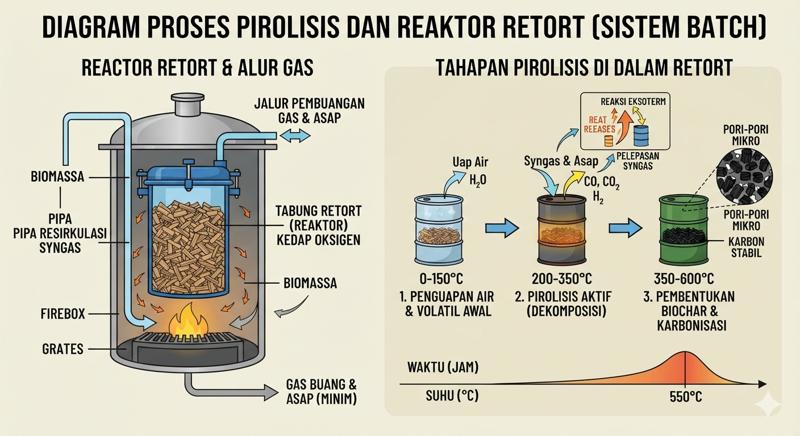
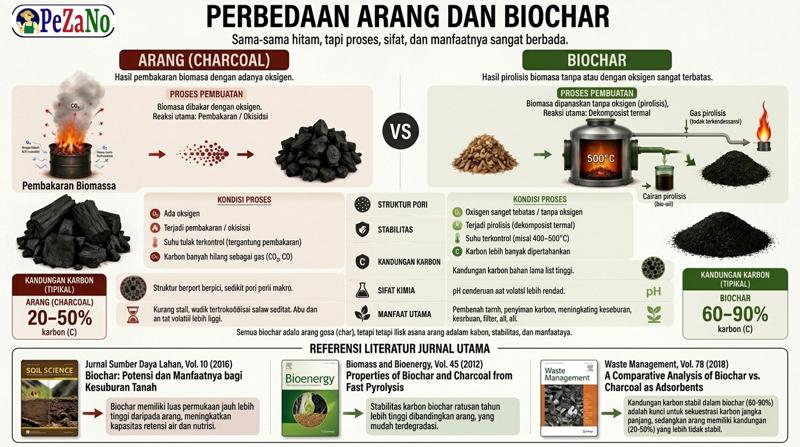
Not chemical fertilizers, not complicated technology. It's just black carbon resulting from burning organic material without oxygen.
It sounds simple, but the effect is amazing.
Each biochar particle is like a small house for soil microbes.
It stores nutrients, water, and carbon — while neutralizing soil acidity.
Imagine like an underground social network that is busy working, without showing off, without making a sound.
They're not trending, but they make the roots grow healthier, the harvest lasts longer, and the air is a little cleaner.
Soil treated with biochar can store carbon for hundreds of years.
This means that every time you spread biochar, you are not only helping the harvest — you help the earth “save oxygen”.
Slow But Impactful
Slow Soil Movement is not about speed, but about direction.
This movement invites us to think again:
Instead of continuing to add fertilizer, why not improve the soil?
Instead of burning agricultural waste, why not turn it into valuable biochar?
Farmers who join this movement are no longer just cultivators of the land, but guardians of small ecosystems.
They began to realize that every straw, twig, or harvest residue had the potential for a second life.
Rather than being burned to smoke, they are processed into biochar — black, but full of life.
From Rice Fields to the Future
Imagine a small village in Java.
Every harvest season, the remaining rice stalks are usually burned on the edge of the rice fields, making the sky full of smoke.
But this year is different.
The farmers began to collect the remaining harvest, they burned it slowly in drums without oxygen.
The result? Biochar.
They spread it into the soil, mix it with organic fertilizer, and see the changes.
Soil that was previously hard has become loose.
The water doesn't absorb quickly, the plant leaves are greener, and the harvest is a little bigger.
Not a big change overnight, but definitely noticeable.
And most importantly — they know their direction is right.
One land has changed. Then two. Then one sub-district also tried.
This movement did not go viral on TikTok, but spread through chats in coffee shops, through the hands of farmers helping each other.
That's the Slow Soil Movement — small movements with big effects.
From Land to Sky
Many people think the solution to climate change can only come from high technology.
But biochar proves otherwise.
Sometimes, the most powerful solutions actually come from the ground — from things that seem trivial.
Imagine if every hectare of land in the world was spread with biochar.
Trillions of tons of carbon will be stored safely beneath the surface, no longer rising into the atmosphere.
That means: global temperatures can be more stable, and the earth can breathe longer.
Cool, right? But what makes it even cooler is:
it all started from ordinary people who care about their own land
Quiet Revolution
Biochar doesn't need a big stage.
He simply works under our feet, every day, without a sound.
This movement does not require you to be an activist, scientist, or big land owner.
Just one thing: awareness.
That land is not an inanimate object.
That from there, all life begins — including us, and the future of our food.
So, if the world continues to run fast, let us be the ones who walk slowly but surely.
Because in this quiet movement, there is a great power growing: new hope from underground.
The Slow Soil Movement is not just about biochar.
It's about us — a generation that learns to grow the future, one handful of soil at a time.