Feasibility Study of Biochar Products from Local Agricultural Waste Introduction
Agriculture in Indonesia produces large amounts of organic waste every year, such as rice husks, straw, corn stalks, coconut shells and wood dust. Unfortunately, most of this waste has not been utilized optimally and is often burned openly, which actually increases carbon emissions into the atmosphere.
One innovative solution for managing agricultural waste is to convert it into biochar, namely biological charcoal which has high use value in various fields, especially in agriculture and environmental management. This article discusses a feasibility study of biochar products from local agricultural waste, including the definition, manufacturing process, potential benefits and economic opportunities.
1. Understanding Biochar
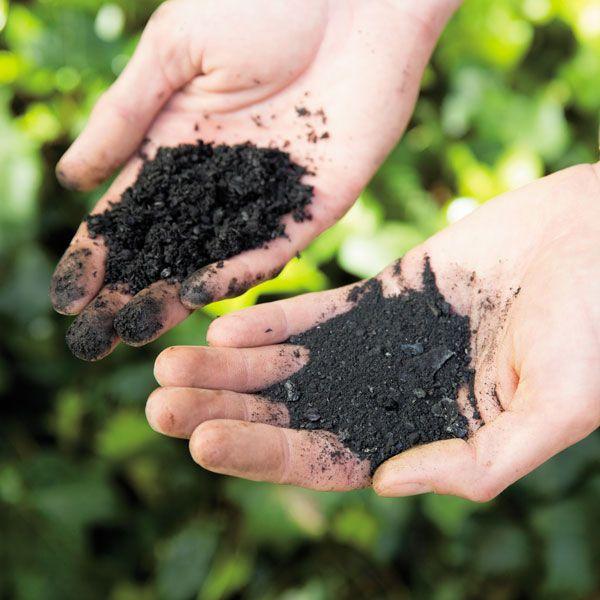
Biochar is biological charcoal produced through the process of pyrolysis, namely burning organic materials at high temperatures with little or no oxygen. This process converts biomass into a high-carbon solid material with a porous structure.
Scientifically, biochar is included in the category of stabilized carbon which can survive in the soil for hundreds or even thousands of years. This property makes biochar play an important role in carbon sequestration, helping to reduce greenhouse gas emissions.
2. Local Raw Materials for Biochar Production
Indonesia has very abundant biomass resources. Almost all types of agricultural waste can be used as raw material for making biochar, such as:
-
Rice husks
-
Straw and rice stalks
-
Corn stalks and cobs
-
Sawdust and rotted wood
-
Coconut shell or palm oil
-
Coffee skins and plantation waste
The use of local materials not only reduces agricultural waste, but also increases regional economic value through processing waste into marketable products.
3. Biochar Production Process
The biochar production process consists of several main stages:
-
Preparation of raw materials — The material is dried to a low water content.
-
Pyrolysis — The material is put into a closed reactor and heated to between 300–600°C with minimal oxygen.
-
Cooling — The combustion products are cooled naturally so that the carbon structure remains stable.
-
Refining and filtering — biochar is ground to the desired size for a particular application.
On a small scale, this process can be carried out using a simple pyrolysis drum, while on a large scale an automatic closed reactor can be used for more efficient results.
4. Biochar
Product CharacteristicsA good biochar has several characteristics:
-
Dark black and light.
-
No pungent odor.
-
The surface is porous and does not crumble easily.
-
Has a neutral to slightly alkaline pH.
-
Carbon content remains high (>70%).
These characteristics determine the quality and effectiveness of biochar in agricultural and water treatment applications.
5. Benefits of Biochar in Various Fields
Biochar products have broad benefits, including:
a. Agricultural Sector:
-
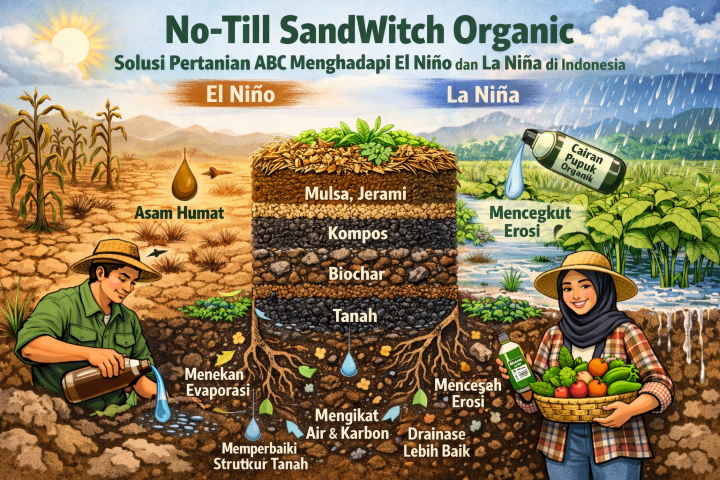
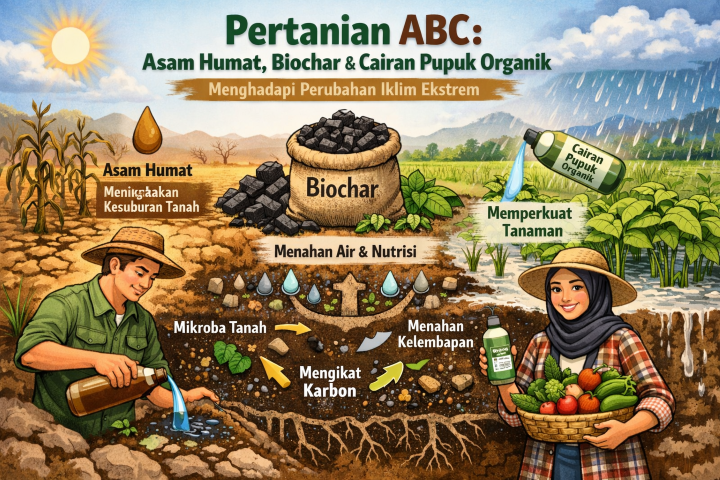
Increases soil fertility by improving its structure and porosity.
-
Absorbs and stores nutrients so they are not easily washed away by rainwater.
-
Becomes a habitat for soil microorganisms that are beneficial for plants.
b. Fisheries Sector:
-
Absorbs ammonia and toxic materials in fish ponds.
-
Becomes a medium for growing good bacteria to maintain water quality.
c. Environmental Sector:
-
Storing carbon in solid form for the long term.
-
Reducing greenhouse gas emissions from organic waste.
-
Can be used as a filtration medium for domestic wastewater.
6. Economic Potential of Biochar Products
Biochar production from local agricultural waste has high economic value. Some business opportunities include:
-
Sales of biochar as a soil conditioner for farmers and planters.
-
Production of special biochar for water filtration media or animal feed.
-
Development of derivative products such as biochar-based organic fertilizer (biochar compost).
In addition, because biochar also supports reducing carbon emissions, this product can be commercialized in carbon credit schemes which are valuable in the global market.
7. Technical and Environmental Feasibility
Technically, biochar production is very possible in rural areas with simple equipment and local raw materials. Pyrolysis technology is also considered environmentally friendly because it produces low emissions and utilizes abundant organic waste.
From a sustainability perspective, biochar helps build a circular economy — waste becomes raw material, the results increase land productivity, and ultimately reduce dependence on chemical fertilizers.
8. Challenges in Production and Development
Several obstacles still faced in biochar production include:
-
Lack of public knowledge about its benefits and how to use it.
-
Limitations of efficient pyrolysis technology at the farmer level.
-
There are no national biochar quality standards for commercial products yet.
However, with the support of training, collaboration between farmers, government and academics, this challenge can be overcome.
Conclusion
Biochar from local agricultural waste is a technically, economically and environmentally feasible product.
Apart from being able to reduce organic waste and carbon emissions, biochar also increases soil fertility, maintains water quality, and opens up new business opportunities in rural areas.
Through ongoing research and development, biochar products can become an important part of the green agriculture of the future, supporting Indonesia towards a production system that is sustainable, efficient and environmentally friendly. 🌿